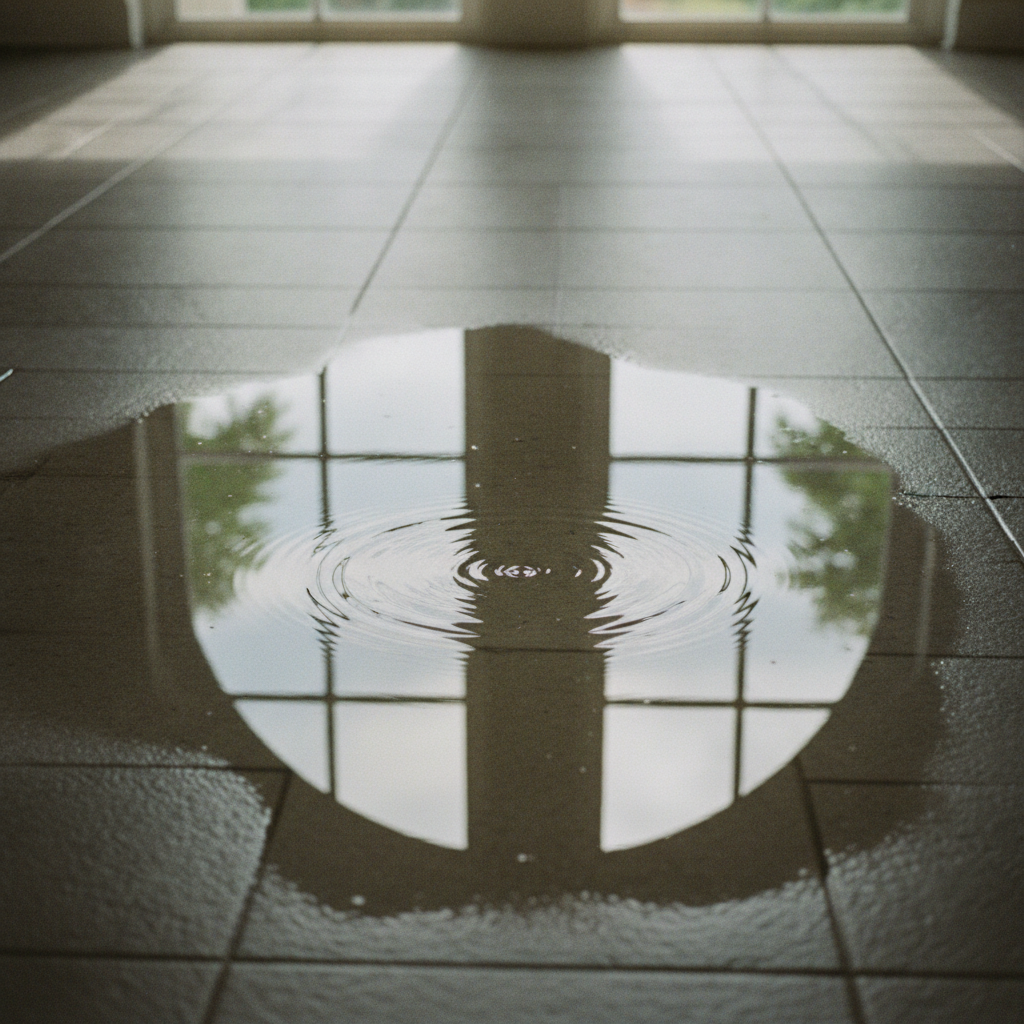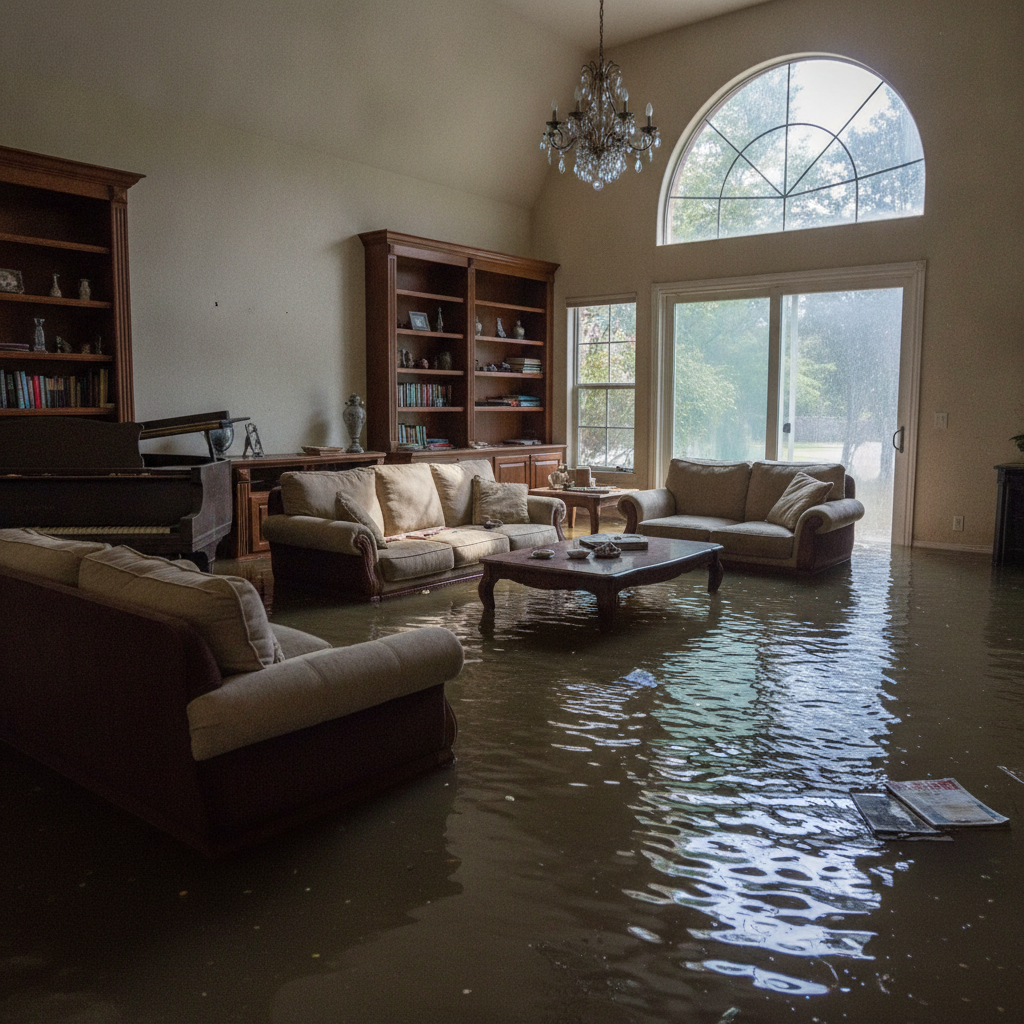
You walk into the kitchen and your sock is wet. Or you come home from work and there’s water coming from under the bathroom door. Or the ceiling downstairs has a stain that wasn’t there this morning — and it’s growing.
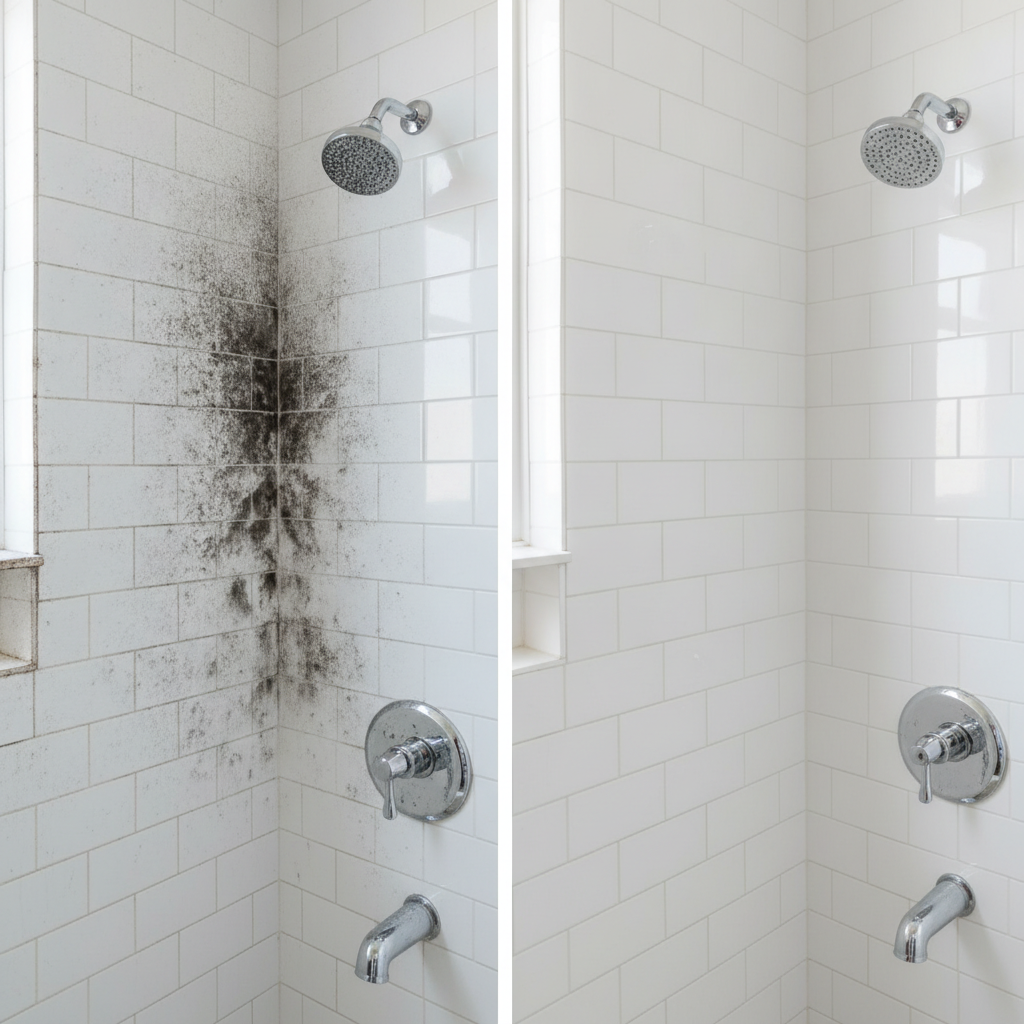
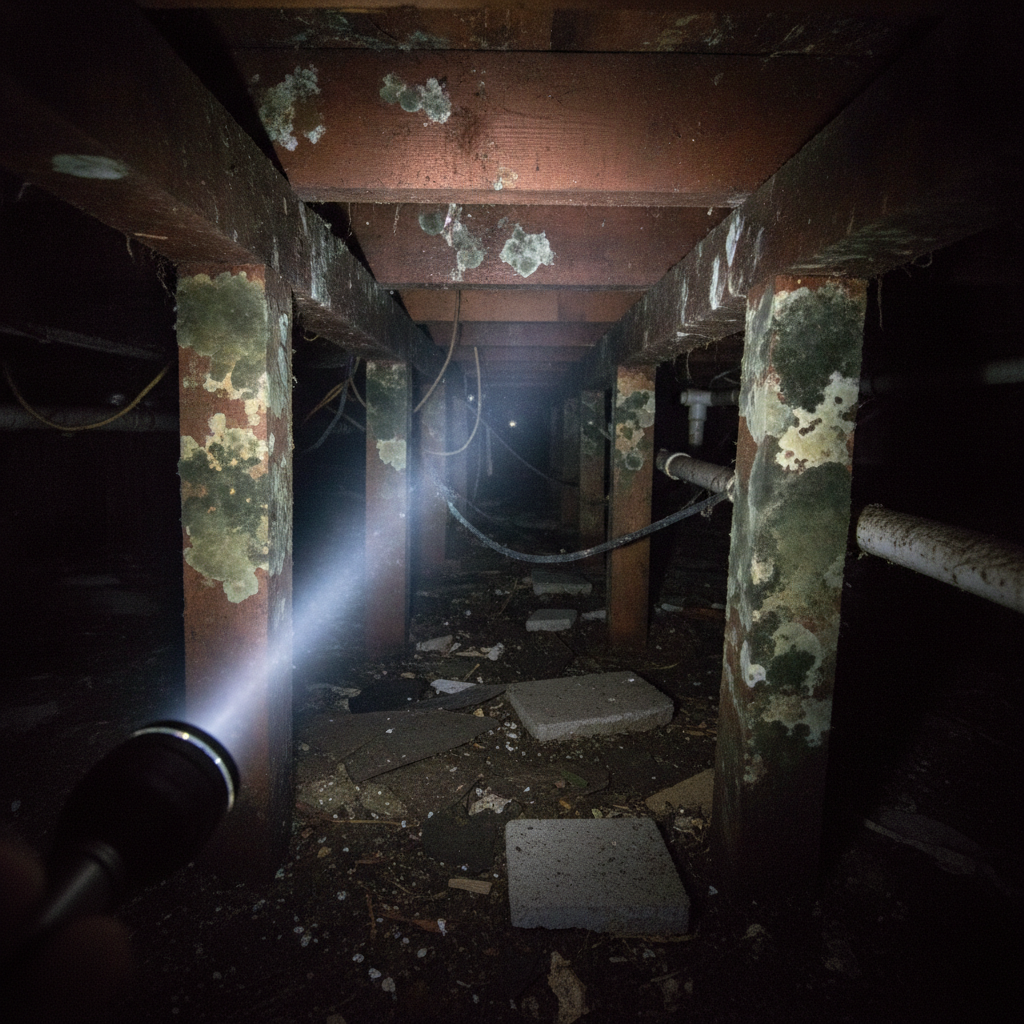
Water damage is one of those problems where the first day matters more than the first week. What you do in the first 24 hours decides whether this is a contained cleanup or a mold remediation job. Drywall starts absorbing water immediately. Mold can start colonizing wet drywall, insulation, and framing within 48 to 72 hours. Every hour the water sits, it spreads further into materials you can’t see.
We’re Timberline Restoration, based in San Juan Capistrano and working across Orange County. This is the exact sequence we walk homeowners through when they call us — in order, with the reasoning behind each step.
Hour 0–1: Stop the Water and Make It Safe
Step 1: Find the source and shut the water off. If water is actively flowing, stop it before you do anything else. That usually means one of three things:
- The fixture shutoff: under the sink, behind the toilet, or at the washing machine. Turn it clockwise until it stops.
- The main house shutoff: usually where the water line enters the house — often in the garage, near the water heater, or at an exterior hose bib in older South OC homes. If you don’t know where yours is, find it now, before you need it. Seriously — go look. It takes two minutes and it saves thousands.
- The street shutoff: if the main house valve doesn’t stop the flow, or the leak is between the meter and the house, shut it at the meter. You’ll need a meter key or a pair of pliers.
Step 2: Kill the power to affected areas — carefully. Water and electricity are a bad combination. If water is near outlets, light switches, or appliances, turn off the breaker for that area at your electrical panel. Do not walk through standing water to reach the panel. If the panel itself is wet or you have to cross water to get there, stay out and call an electrician or the fire department’s non-emergency line.
Step 3: Move what you can save, and don’t move what you can’t. Get rugs, electronics, and valuables out of the wet area. Lift furniture onto blocks or foil if you can do it safely. But don’t start tearing out drywall or pulling up flooring yourself — that comes later, and doing it wrong can spread contamination or damage materials that could have been saved. And if the water is sewage (toilet backup, drain overflow), don’t touch it at all. That’s a biohazard job, not a mop job.
Hour 1–4: Document Everything, Then Call for Help
Step 4: Take photos and video before you clean anything up. This is the step people skip, and it’s the one their insurance adjuster cares about most. Walk through every affected room and photograph:
- Standing water and wet areas, from multiple angles
- The source, if you can see it (burst pipe, failed supply line, overflowing appliance)
- Damaged items — furniture, flooring, electronics, personal property
- Water lines on walls and baseboards, which show how high the water got
- The outside of the house, if the water came from outside (roof leak, window leak, grading problem)
Take a video walkthrough too, narrating what you see as you go. Back it up to your phone’s cloud storage right away — not just on the phone, which could also get wet.
Step 5: Call your insurance company and open a claim. Don’t wait to see how bad it is. Call your homeowner’s insurance carrier and report the loss. They’ll give you a claim number and tell you what they need from you. Most standard California homeowner policies cover sudden, accidental water damage — a burst pipe, a failed washing machine hose, a supply line that let go. They generally do not cover gradual leaks from deferred maintenance, or flooding from outside the house (that’s a separate flood policy). Your adjuster will sort out coverage; your job right now is to report it and start the paper trail.
Step 6: Call a restoration company. This is us, if you’re in Orange County — but whoever you call, call now, not tomorrow. A restoration crew’s first job is extraction and moisture mapping: finding everywhere the water actually went, not just where you can see it. Water travels. A leak in an upstairs bathroom can soak the subfloor, run down inside a wall cavity, and show up as a stain on the ceiling two rooms away. A good crew uses moisture meters and thermal imaging to map the full extent before anything gets dried or cut out.
When you call, have ready: what happened, when you found it, whether the water is stopped, how many rooms are affected, and whether any water is sewage. That lets the crew bring the right equipment on the first trip.
Hour 4–12: Extraction and the Drying Plan
Step 7: Water extraction. Standing water gets pulled out with commercial extractors — not a shop vac, though a shop vac is better than nothing if you’re waiting for a crew. The goal is to get bulk water out fast, because every hour of standing water means deeper absorption into flooring, subfloor, and wall cavities.
Step 8: Moisture mapping. The crew takes moisture readings across every affected surface — drywall, baseboards, flooring, framing — and maps where the water spread. This is the step that separates a professional job from a guess. A wall can look dry on the surface and be saturated behind the paint. If the wet area isn’t fully mapped, the drying plan misses spots, and those spots grow mold.
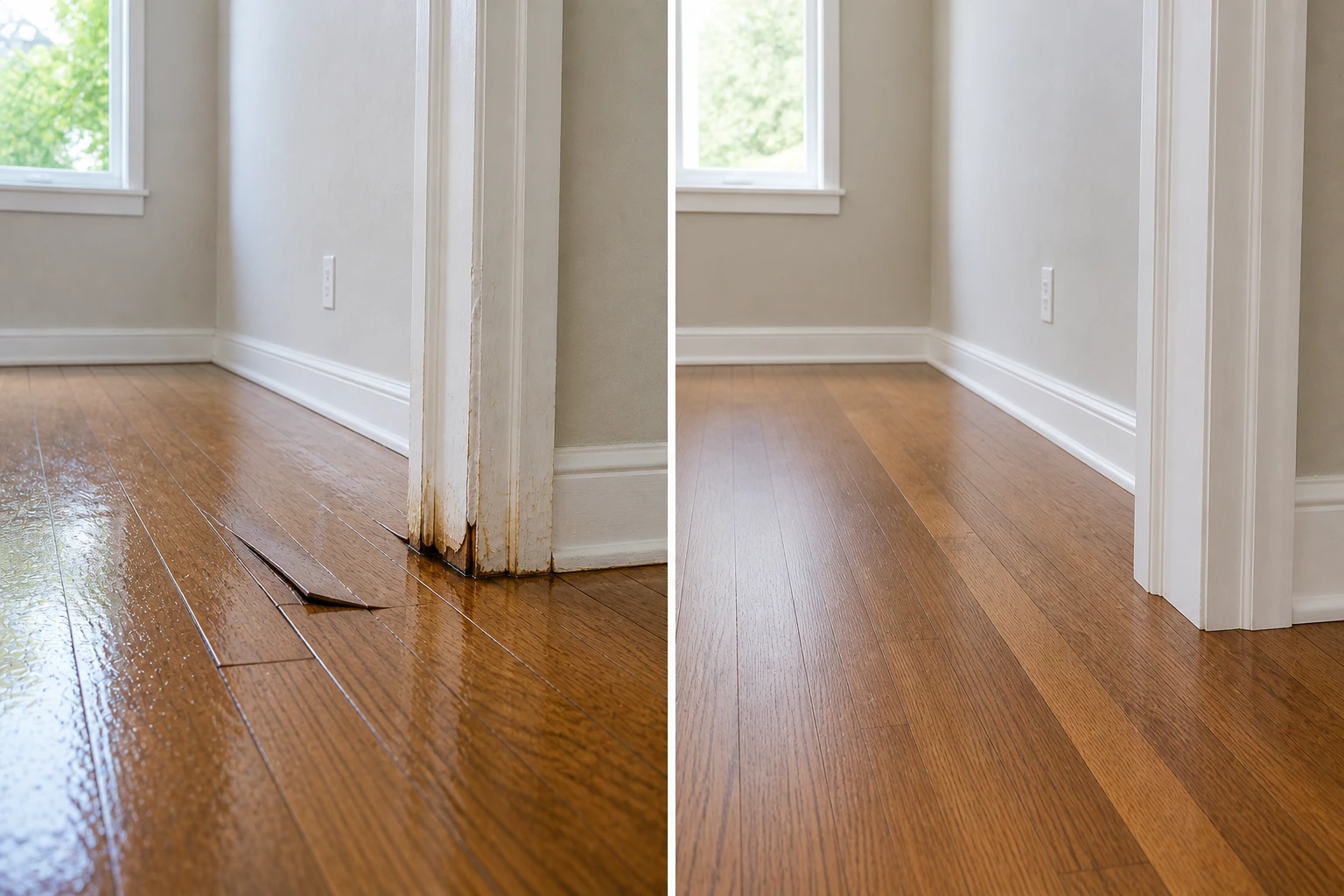
Step 9: Controlled demolition, if needed. Some materials can’t be saved. Drywall that stayed wet more than 48 hours, or that shows visible wicking up from the floor, usually has to come out. Wet insulation behind drywall almost always comes out — it doesn’t dry in place. Carpet pad is typically removed; the carpet itself can sometimes be dried and saved. Hardwood floors are a judgment call based on how much water they took and how quickly drying started. A restoration crew makes these calls based on moisture readings, not assumptions — and they should explain each one to you before they start cutting.
Hour 12–24: Drying Starts, and the Clock Keeps Running
Step 10: Commercial drying equipment goes in. This is air movers and dehumidifiers — industrial-grade, not the box fan from your garage. A typical residential drying job runs three to five days, with the equipment running around the clock. The crew comes back daily to take moisture readings and adjust the setup. Your job during this phase is mostly to stay out of the way and keep the equipment running — don’t turn it off because it’s loud.
Step 11: Keep documenting. Save every receipt: the plumber who fixed the source, any emergency purchases, hotel costs if you had to leave the house. Photograph the drying setup and the readings the crew shares with you. All of it supports your insurance claim.
Step 12: Don’t rush the rebuild. Once the structure is verified dry, repair planning starts — new drywall, flooring, paint, trim. This is where a lot of homeowners get impatient, and it’s where a lot of bad decisions happen. Rebuilding over material that isn’t fully dry traps moisture behind new walls, and you’ll be calling us back in six months for mold. The drying phase takes as long as it takes — usually three to five days for a typical residential job, longer for multi-room or multi-floor events.
What Water Damage Looks Like in South Orange County Homes
Orange County houses have their own water damage patterns, and it helps to know them.
Copper pipe pinhole leaks. A huge share of our calls in South OC are slab leaks and pinhole leaks in copper supply lines. Much of the county’s housing stock — Mission Viejo, Laguna Niguel, Laguna Hills, the older tracts in San Juan Capistrano and San Clemente — was built in the 1970s and 80s with copper plumbing. Decades of water chemistry have thinned those pipes from the inside. A pinhole leak in a slab line can run for weeks before anyone notices, because the water goes into the ground and wicks up through the slab. If your water bill jumps for no reason, or you feel a warm spot on the floor, or you hear running water when everything’s off — call someone.
Washing machine hoses. The rubber supply hoses on a washing machine are one of the most common flood sources we see, especially in upstairs laundry rooms. A burst hose can dump hundreds of gallons an hour. If your hoses are more than five years old, or they’re the original rubber ones, replace them with braided stainless steel lines. It’s a $30 fix that prevents a $10,000 loss.
Upstairs bathrooms over living space. Two-story South OC homes — and there are a lot of them — put bathrooms over kitchens and living rooms. A failed toilet supply line or a shower pan leak upstairs becomes a ceiling collapse downstairs. The water doesn’t stay where it started; it follows gravity and framing, and by the time you see the stain on the ceiling, the framing above it has been wet for a while.
Rain season roof and window leaks. Orange County’s rain comes in bursts — a few big winter storms, often with wind driving rain sideways. Tile roofs in coastal cities like Dana Point and San Clemente take salt air and wind-driven rain; the underlayment under the tile is what actually keeps water out, and it ages out after 25 to 30 years. Window leaks show up at the same time, usually at the sill or where stucco meets the frame. If you see water inside during a storm, it may not be a roof problem at all — it may be a window flashing problem, and the fix is different.
Condos and HOAs. A lot of South OC water damage happens in condos — Laguna Woods Village, the condo communities in Laguna Niguel and Mission Viejo, the townhomes in Ladera Ranch and Rancho Santa Margarita. In a condo, a leak in your unit can be your neighbor’s problem, and vice versa. Know where your HOA’s responsibility ends and yours begins before there’s water on the floor. Typically the HOA covers common-area plumbing and the building envelope; you cover what’s inside your unit. Get your HOA’s insurance and maintenance documents now, not during an emergency.
What This Costs — Honest Ranges
Every job is different, but here’s what homeowners in Orange County typically see:
- Emergency extraction and drying, single room: typically $1,500 to $4,000, depending on how much water and how many days of drying.
- Multi-room or two-story event with demolition: typically $4,000 to $12,000 for the mitigation phase alone.
- Rebuild (drywall, flooring, paint, trim): varies enormously — $5,000 to $30,000+ depending on scope and finishes.
- Mold remediation, if it gets that far: typically $2,000 to $10,000+ for a contained job.
These are typical ranges, not quotes, and insurance covers most sudden water damage events after your deductible. The point of the ranges is this: the cost of responding fast is almost always less than the cost of waiting. A $2,000 drying job today is a $10,000 mold job next month.
Frequently Asked Questions
How fast do I need to act after finding water damage?
Within hours, not days. Drywall absorbs water immediately, and mold can begin growing in 48 to 72 hours. Shut off the water, document the damage, call your insurance company, and call a restoration crew the same day you find it. The first 24 hours set the course for everything that follows.
Can I clean up water damage myself?
For a small, clean-water spill — a glass of water, a minor overflow you caught immediately — yes, dry it thoroughly and watch the area for a few days. For anything that soaked into flooring, drywall, or framing, or any event involving sewage, gray water from a dishwasher, or water that’s been sitting more than a day, get a professional. You can’t see inside a wall cavity, and moisture meters are what tell you whether it’s actually dry.
Will my homeowners insurance cover water damage?
Most standard California policies cover sudden, accidental water damage — burst pipes, appliance failures, a supply line that let go. They generally do not cover gradual leaks from lack of maintenance, or flooding from outside the home (groundwater, storm surge, overflowing bodies of water), which needs a separate flood policy. Report the claim promptly and keep records of everything — your adjuster decides coverage, but the documentation you provide shapes that decision.
How long does the drying process take?
Three to five days for most residential jobs, with commercial air movers and dehumidifiers running continuously. Larger events affecting multiple rooms or floors take longer. The crew takes daily moisture readings and won’t sign off until the structure is verified dry — don’t let anyone rebuild over wet framing.
Does wet drywall always have to be removed?
Not always. Drywall that dried quickly and never got saturated through its core can sometimes be saved. Drywall that stayed wet more than 48 hours, shows wicking, or has any mold present needs to come out. The call is made from moisture meter readings, not from how it looks.
What if the water came from my neighbor’s unit or a common area?
In condos and townhomes, document everything the same way, notify your HOA immediately, and call your insurance company. Your HOA’s insurance may cover common-area sources, and your policy may cover your unit’s damage. Don’t wait for the HOA to sort out responsibility before you start drying — the mold clock doesn’t care who’s at fault.
If This Just Happened to You
Stop the water, make it safe, take your photos, call your insurance company — and then call us. Timberline Restoration works across Orange County, from San Clemente and Dana Point up through Mission Viejo, Laguna Niguel, and Lake Forest. We handle inspection, moisture mapping, extraction, drying, controlled demolition when needed, and the documentation your adjuster needs.
Email us at restoration@timberlinebuild.co — or use the emergency call button at the top of this site. If water is actively coming into your home right now, call first and email later.
Learn more about water damage restoration in Orange County, mold remediation, and the areas we serve.
Timberline Restoration — License #1136140 — San Juan Capistrano, CA. Serving Orange County: San Juan Capistrano, Dana Point, San Clemente, Laguna Niguel, Laguna Hills, Mission Viejo, Rancho Santa Margarita, Ladera Ranch, Aliso Viejo, and Lake Forest.