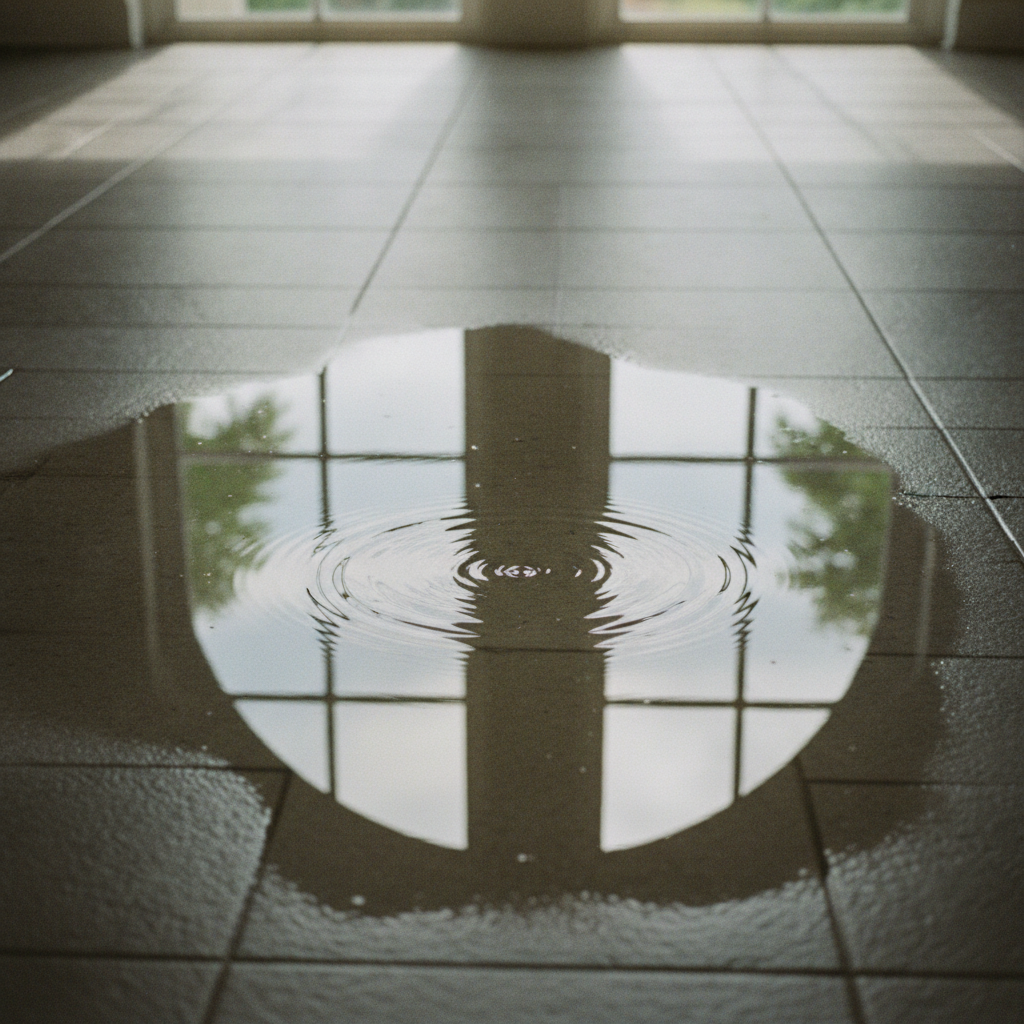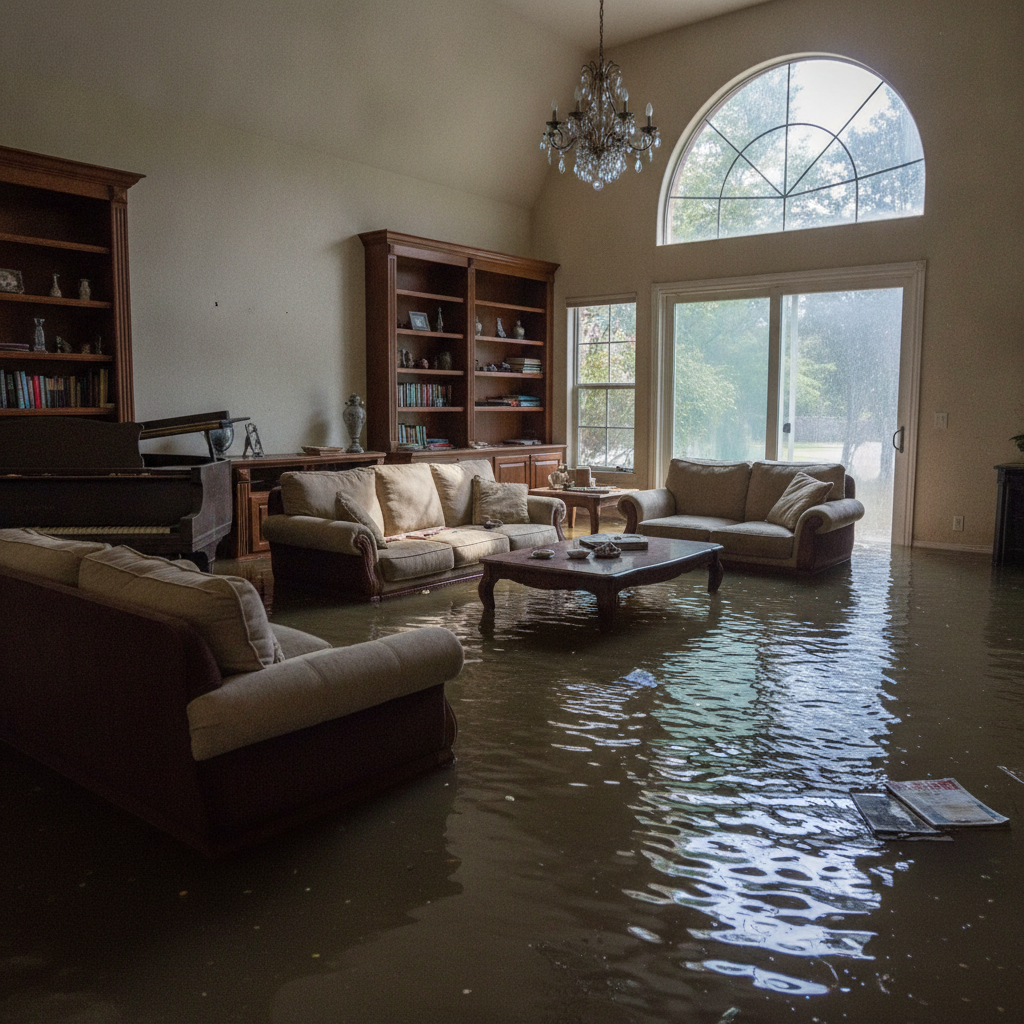
A flooded bathroom looks contained. The water is on the tile, maybe pooling around the toilet or spreading out from under the vanity. You mop it up, the floor looks dry by dinner, and it is tempting to call it handled.
Here is the problem: the water you can see is the smallest part of a bathroom flood. Water does not stay where it lands. It follows gravity, seams, and the hidden paths inside your walls and floors, and in a typical South Orange County home it can be inside a wall cavity, under a floor, or in the ceiling of the room below within minutes — long before anything looks wet. This guide explains where bathroom water actually goes, what it damages on the way, what can be dried and saved, and the point at which a mop stops being a plan.
Start With the Source: Not All Bathroom Floods Are Equal
Where the water came from decides how far it likely traveled and how clean it is.
Supply line failures — a burst angle stop, a split braided toilet or faucet supply line, a failed washing-machine-style fill hose — release clean water under pressure. A supply line does not drip politely; it can discharge hundreds of gallons before anyone notices, especially overnight or while you are at work. Volume is the danger here.
Drain and fixture overflows — a clogged toilet that keeps running, a tub that overflows, a slow sink drain backing up — release water that has been in fixtures and drains. Toilet overflows involving waste are a contamination problem, not just a water problem, and they change the cleanup entirely.
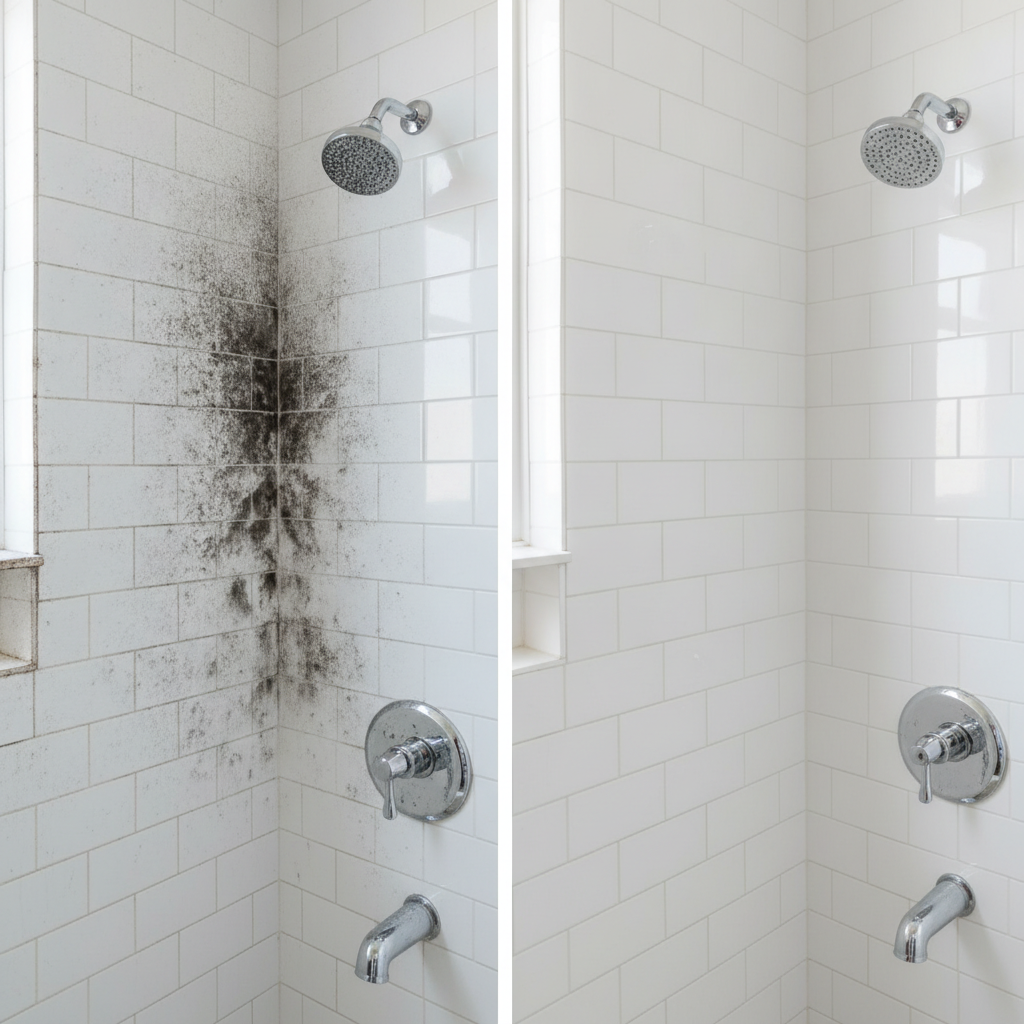
Slow leaks — a wax ring failing under a toilet, a shower valve seeping inside the wall, a cracked grout line letting shower water behind tile for months — release small amounts for a long time. These are often the most destructive of all, because by the time a stain or soft spot appears, the subfloor and framing have been wet for weeks or months and mold has usually moved in.
In South Orange County, the housing stock shapes the outcome. Much of Mission Viejo, Lake Forest, Laguna Niguel, and Rancho Santa Margarita is slab-on-grade tract housing from the 1970s through 1990s: a first-floor bathroom flood sits on concrete, but a second-floor bathroom — and most primary bathrooms are upstairs — sits over the kitchen, living room, or garage below. Older coastal homes in Dana Point, San Clemente, and San Juan Capistrano add raised foundations, older plumbing, and decades of layered flooring. Same flood, very different path.
Path One: Through the Floor
Water on a bathroom floor looks for the lowest and weakest points, and a bathroom floor is full of them.
Grout lines and tile edges. Tile itself is fairly waterproof; grout is not, and the perimeter where tile meets the tub, shower curb, and walls is sealed with caulk that ages, cracks, and separates. Water slips through those joints and reaches the underlayment and subfloor.
Fixture penetrations. Every toilet, tub drain, and supply line passes through the floor, and each penetration is a hole water can pour through. The toilet flange is the big one: a failed wax ring lets water escape under the toilet with every flush, invisible from above, soaking the subfloor ring by ring until the floor feels spongy.
The vanity trap. Water from a supply or drain leak inside a vanity cabinet pools on the cabinet floor, wicks into the cabinet box and the drywall behind it, and spreads sideways under the cabinet toe-kick — which is why a bathroom flood often damages a wall in the next room, not just the bathroom.
Down to the ceiling below. In a two-story home, water through the floor becomes water in the ceiling cavity below. It spreads across the top side of the downstairs drywall, soaks insulation, and runs along joists before it finds a seam or a recessed light to drip from. That is why the stain downstairs often appears several feet away from the bathroom above — water travels horizontally in the ceiling before it shows itself. By the time a downstairs ceiling is stained and bubbling, the cavity above it has usually been wet for a while.
Path Two: Into and Through the Walls
Walls are hollow, and water knows it.
Wicking. Drywall is gypsum wrapped in paper, and it wicks water upward like a sponge — a flood that only touched the floor can climb a foot or more up the drywall in the first day. Baseboards hide the worst of it. The wall can look fine at eye level while the bottom plate and the lower drywall are saturated.
Inside the cavity. Water that enters a wall — from a leaking shower valve, a pinhole in a copper supply line, or flood water pushed through a wall base — runs down the inside face, soaks insulation, and pools on the bottom plate and the floor or slab beneath. Insulation holds that moisture against the framing and slows drying dramatically. A wall that feels dry on the surface can still be wet inside for days.
Sideways into adjoining rooms. Interior walls do not stop at the bathroom door. Water in a shared wall cavity reaches the bedroom, closet, or hallway on the other side, which is why a bathroom flood so often produces a musty closet or a warped baseboard in a room that never got wet on its floor.
The shower and tub surround problem. Shower water behind tile travels down the backer board and can exit at the tub lip, the curb, or the wall base — sometimes into a completely different room. Chronic surround leaks are a leading cause of the hidden damage we describe in our guide to hidden water damage signs and slab leaks — different source, same hidden-travel behavior.
Path Three: Along the Slab and Under Flooring
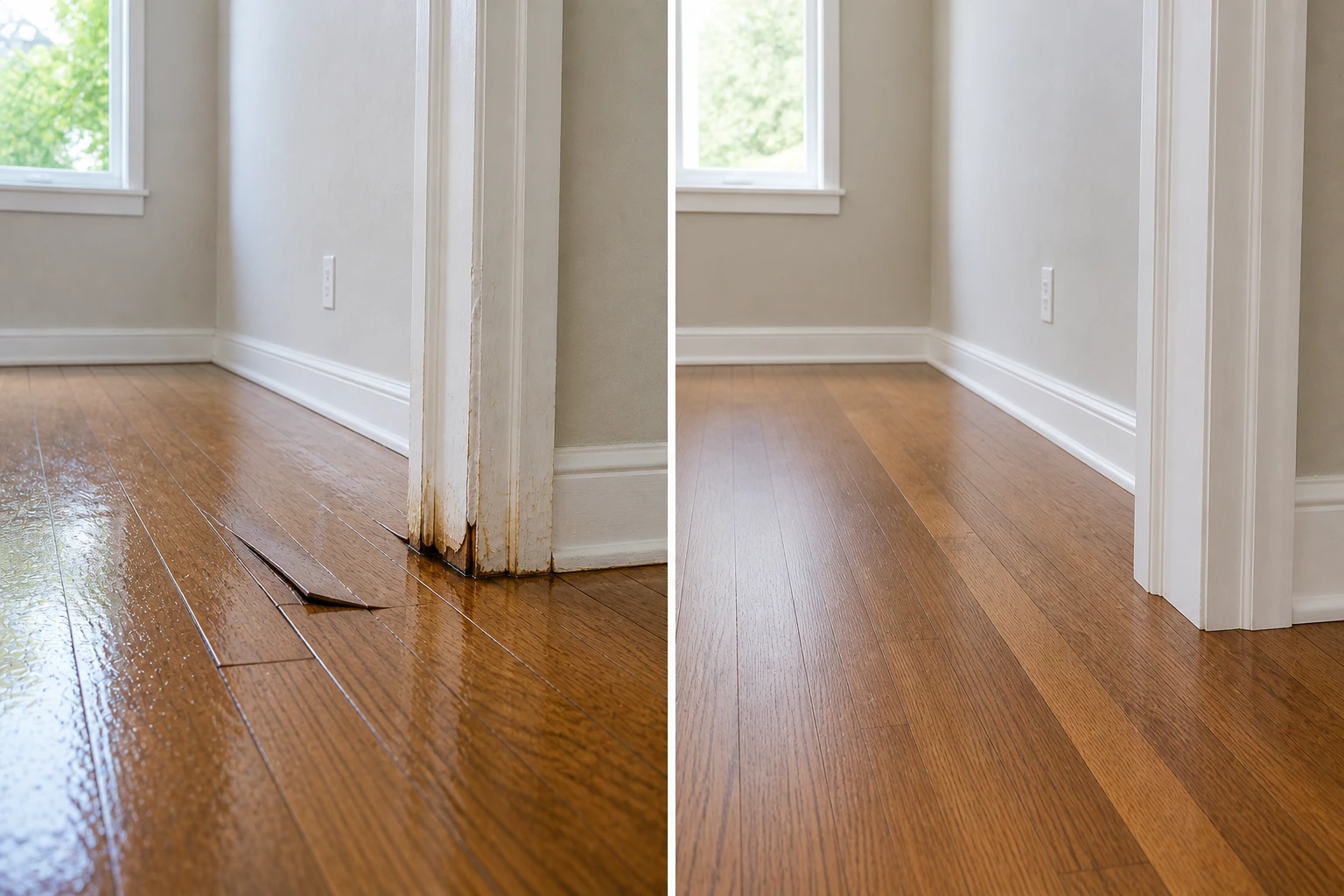
In slab-on-grade South OC homes, a first-floor bathroom flood spreads across the slab under whatever flooring touches it. Luxury vinyl plank is more water-tolerant than laminate or hardwood, but water underneath any floating floor travels the whole room and into hallways and bedrooms before it evaporates — and it does not evaporate quickly under a floor. It sits on the slab, feeds mold on baseboards and drywall bottoms, and can wick into adjoining carpet and pad. Tile on slab contains surface water better, but grout and perimeter joints still let water under and across.
If your home has a raised foundation — more common in older San Clemente, San Juan Capistrano, and Dana Point homes — flood water goes through the floor into the crawlspace, soaking joists and subfloor from below and pooling on the soil or vapor barrier. Crawlspace moisture lingers far longer than indoor moisture and is easy to forget because nobody looks under the house after a bathroom flood. They should.
What Happens on the Clock
Water damage is a timeline problem.
First minutes to hours: Water spreads through floors and cavities as described above. Porous materials — drywall, insulation, carpet pad, cabinet boxes, subfloor — begin absorbing immediately.
24 to 48 hours: Drywall that stays wet starts to lose strength. Swelling begins in particleboard vanity boxes and laminate flooring edges. Odors develop as materials stay saturated.
48 to 72 hours and beyond: In Southern California’s climate, mold can begin growing on wet drywall paper, insulation, and framing within roughly two to three days of sustained moisture. This is the window that decides whether a flood is a drying job or a drying-plus-remediation job. Our step-by-step guide to the first 24 hours after water damage exists because this first day matters more than any other.
Weeks: Untreated, wet subfloor around a toilet flange rots, framing stays damp, and a slow leak becomes a structural repair plus mold remediation. The repair bill multiplies not because anyone is padding it, but because water kept working while nothing else did.
What Can Be Dried, and What Usually Has to Come Out
Homeowners ask this on every job, and the honest answer is: it depends on the material, how long it was wet, and whether the water was clean.
Often dryable in place: Solid wood framing, concrete slab, tile over a sound substrate (if moisture has not trapped beneath it), and drywall that got wet briefly at the very bottom and reads dry-able on a moisture meter — dried with air movers and dehumidifiers directed into the cavity, sometimes through small access holes.
Usually removed: Soaked carpet pad, saturated insulation inside a closed wall, swollen particleboard or MDF (vanity bottoms, toe-kicks, laminate), drywall that stayed wet past the 48-hour mark or shows mold, and any material touched by contaminated toilet-overflow water. Removing a strip of drywall at the base of a wall — a flood cut — is often what allows the cavity and framing to actually dry instead of staying sealed and wet.
These calls should be made from moisture meter readings and a moisture map of the affected rooms, not from how the surface feels. Dry to the touch and dry inside the wall are two different conditions, and only one of them prevents mold. Whether insurance treats your flood as covered water damage also turns on the source and how sudden it was — our guide to whether homeowners insurance covers water damage in California walks through that distinction, and our water damage restoration services page explains how a professional dry-out is documented for your adjuster.
What to Do in the First Hour
- Stop the water. Shut off the fixture valve; if it does not hold, shut off the house main. For homes in South OC tracts, the main shutoff is typically at the front of the house near the street-side hose bib or in a ground box near the meter — find yours before you ever need it.
- Kill power to the wet area if water is near outlets or has reached a ceiling below — water dripping through a ceiling light is an electrical hazard, not just a stain.
- Get standing water up with towels, a mop, or a wet vacuum, and move anything dry-able off the floor.
- Do not seal anything in. Do not close a wet vanity and forget it, do not run only a bathroom fan and assume the wall dried, and do not paint over a ceiling stain until the cavity above it reads dry.
- Photograph everything — source, spread, damaged items — before cleanup goes further. That documentation matters for insurance.
- Call for a moisture inspection if water reached walls, flooring edges, a second story, or the ceiling below, or if the source ran for more than a short time. Those are the floods that travel.
Frequently Asked Questions
My bathroom floor looks dry. Can water still be inside the wall?
Yes — that is the most common outcome of a bathroom flood, not the exception. Drywall wicks water up from the floor, and water that entered the wall cavity sits on the bottom plate behind dry-looking surfaces. Only a moisture meter reading at the wall base and inside the cavity tells you whether it is actually dry.
How far can bathroom flood water travel?
Further than most people expect. In a two-story home, water from an upstairs bathroom commonly appears in a downstairs ceiling several feet from the room above it, because it spreads across the ceiling drywall and runs along joists. On a slab, water under flooring can travel from a bathroom into hallways and bedrooms. Shared wall cavities carry it into adjoining rooms on the same floor.
Does a flooded bathroom always cause mold?
No — mold needs sustained moisture. A flood that is extracted quickly and dried thoroughly within the first day or two, verified with moisture readings, usually avoids mold growth. A flood that stays wet inside walls or under flooring for 48 to 72 hours or more in our climate is very likely to grow mold on drywall paper, insulation, or framing.
Can I dry it myself with fans?
For a small, clean-water spill caught immediately that never reached walls or flooring edges, household fans and time can be enough. For water that reached drywall, went under flooring, came from a toilet, or affected a second story, household fans do not move enough air or remove enough moisture to dry inside cavities — and they give no readings to prove the structure is dry. That gap is where mold claims and rot come from.
Will insurance cover a flooded bathroom?
Most California homeowners policies cover sudden, accidental water damage — a burst supply line or an appliance failure — while gradual leaks and deferred maintenance are typically excluded. The source and the timeline decide it, which is why documenting the event with photos and professional moisture readings from day one matters. Sewage or waste-involved overflows are handled as contaminated water and may fall under separate coverage limits.
How long does professional drying take after a bathroom flood?
For most residential bathroom floods, the structural drying phase runs about three to five days with commercial air movers and dehumidifiers, after extraction and removal of any unsalvageable material. Larger events — multiple rooms, a ceiling below, or flooring throughout — take longer. Final moisture readings verify the structure is dry before equipment is pulled and repairs begin.
Bathroom Flooded in South Orange County?
If water has reached your walls, floors, or the ceiling below, Timberline Restoration can inspect, map the moisture, and lay out a drying plan before a small flood turns into a mold and rot project. Email Timberline Restoration at restoration@timberlinebuild.co to request an assessment — tell us the source, how long it ran, and which rooms are affected, and we will guide the next step.