Most kitchen fires are small. A pan left on the burner, a towel too close to a burner, grease that flashes over. The flames may be out in two minutes — and the damage is just getting started. Soot rides the heat up and out into rooms the fire never touched, the smell works its way into cabinets and drywall, and the water or extinguisher residue used to put the fire out starts its own damage clock.
What you do in the first hours after a kitchen fire decides how much of your kitchen — and your home — can be cleaned and saved versus torn out and replaced. This guide covers the first steps, how professional smoke and soot cleanup actually works, what homeowners insurance usually does and does not cover, and the mistakes that make a small fire expensive.
First: Safety, Before Anything Else
If the fire is active, get everyone out and call 911. Nothing in this article outranks that. After the fire is out:
- Do not re-enter until the fire department clears it. Kitchen fires can damage wiring, gas lines, and the structure above the stove in ways that are not visible. Firefighters check for hot spots in the wall and ceiling cavity — a fire that looks out can still be smoldering inside the wall.
- Watch for electrical and gas hazards. If the fire involved an outlet, an appliance cord, or a gas range, leave the breaker and gas decisions to the fire crew or a licensed professional. Do not reset breakers to “see if it works.”
- Keep kids and pets out of the affected area. Soot from modern kitchens is not just ash — burning plastics, synthetic fabrics, and finished wood release acidic, toxic residue. It does not belong on skin, paws, or in lungs.
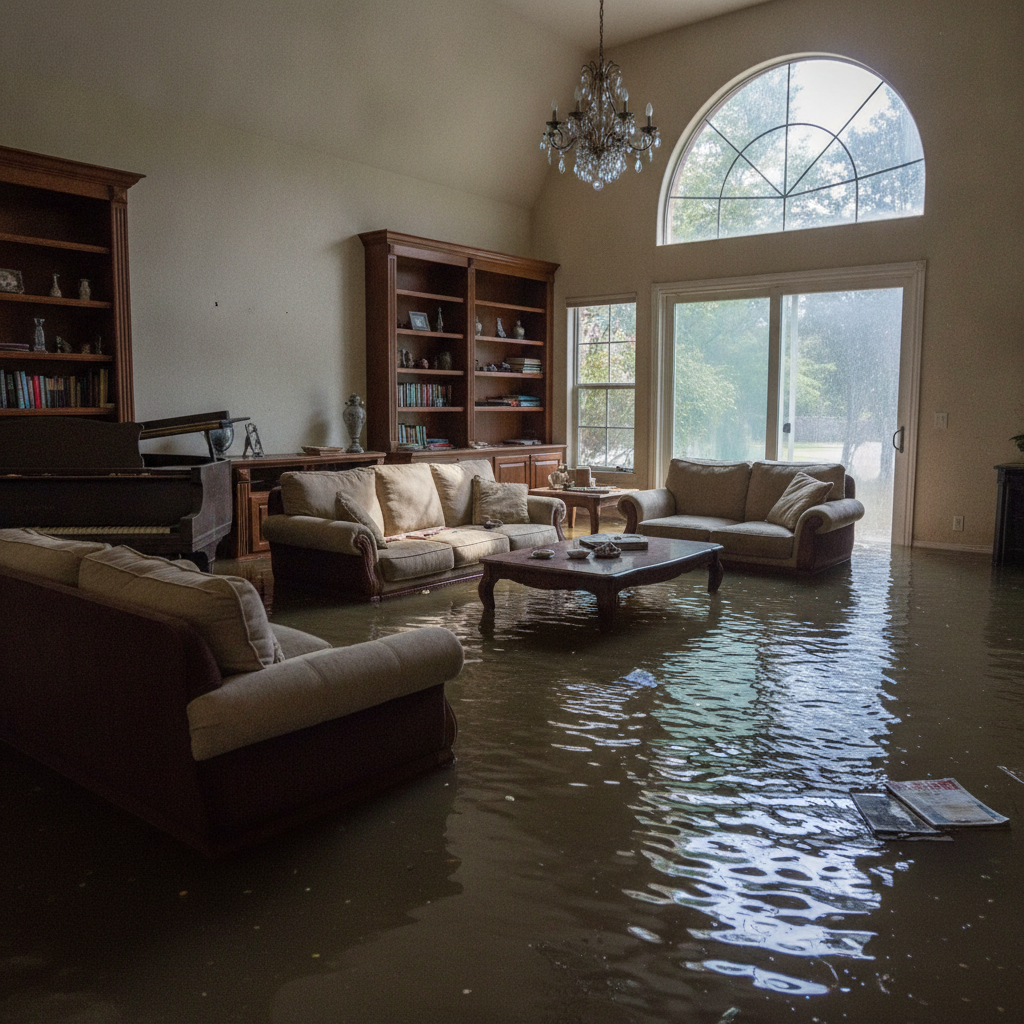
- If you have standing water from suppression, treat it as a separate emergency running in parallel. Water in cabinets, flooring, and the wall cavity starts the mold clock immediately — in coastal South Orange County homes from Dana Point to Huntington Beach, that clock runs fast. Our guide to whether homeowners insurance covers water damage explains the coverage side of that second problem.
The First 24 Hours After the Fire Is Out
- Call your insurance carrier and open the claim. Kitchen fires are among the most common homeowners claims. Report it the same day, get a claim number, and ask what your policy covers for mitigation, temporary housing if the kitchen is unusable, and food loss. Take notes on who you spoke with and when.
- Photograph and video everything before you touch it. Wide shots of every affected room, then close-ups: the stove, cabinets, walls, ceiling, the contents of drawers and the pantry. Soot travels — check and document rooms well beyond the kitchen, including bedrooms and closets on the same floor and the floor above. This documentation is what your adjuster works from.
- Do not start cleaning walls, cabinets, or ceilings yourself. This is the hardest advice to follow and the most important. Soot is not dirt. Wiping it with a wet sponge or household cleaner usually smears it into the paint and sets the stain and odor permanently. Dry soot on some surfaces can be removed with the right dry methods; protein fires (meat, grease, eggs — the most common kitchen scenario) leave a nearly invisible, intensely foul film that needs specific degreasing chemistry. Well-meaning cleanup in hour two is the top reason cleanable surfaces become replacement line items.
- Ventilate if it is safe and the fire crew agrees. Opening windows to clear smoke helps odor, as long as weather and security allow. Do not run your HVAC system — it will pull soot through the ductwork and distribute it to every room on the system, turning a one-room problem into a whole-house cleaning scope. Change or plan to change the HVAC filter as part of cleanup.
- Protect what is clean. Move unaffected items out of the work zone or cover them. Soot migrates on shoes and hands — limit foot traffic through the kitchen until it is cleaned.
- Call a restoration company for mitigation. The first professional visit is about stopping further damage: assessing soot type and spread, protecting surfaces, addressing any suppression water, and scoping the cleaning. This early mitigation is typically covered by your policy as part of your duty to prevent additional loss — and it is far cheaper than the replacement work that follows delayed or incorrect cleaning.
Why Smoke and Soot Damage Is Worse Than It Looks
Homeowners judge a fire by the flames they saw. Restoration professionals judge it by the soot they find. Three things make kitchen fire residue uniquely destructive:
Acidic corrosion starts immediately
Soot residue is acidic. On metal fixtures, appliance finishes, faucets, and hardware, it begins etching and pitting within hours and can permanently stain or corrode finishes within days. The stainless range that looked fine on day one can show permanent discoloration by day five if the residue sits. Fast, correct cleaning is literally what saves the appliances and fixtures.
Protein fire residue is invisible and stubborn
Most kitchen fires are protein fires. They leave a clear, lacquer-like film with an odor far worse than the visible damage suggests. It coats cabinets, walls, and ceilings, resists ordinary detergents, and will bleed odor through new paint if it is sealed in rather than removed. This is why a kitchen can look clean and still smell like a fire — and why painting over smoke damage without proper cleaning and sealing fails every time.
Smoke goes everywhere the air went
Heat rises and pressurizes, pushing smoke into cabinet interiors, drawers, the pantry, inside walls through outlet openings, into the attic, and through the HVAC system if it ran. Soft goods — curtains, upholstery, bedding, clothing in nearby closets — absorb odor deeply. A real scope checks all of it, including rooms with no visible soot, because odor complaints after a job “looked done” almost always trace back to a reservoir nobody opened.
How Professional Fire and Smoke Cleanup Actually Works
Professional fire damage restoration for a kitchen fire typically runs in this order:
- Assessment and testing. The crew identifies the fire type (protein, synthetic, wood, or a mix), tests surfaces to determine which cleaning method each material needs, and maps how far soot and odor traveled — including HVAC and adjacent rooms.
- Water mitigation, if suppression water is present. Fire and water damage arrive together more often than not. Wet cabinets, flooring, and drywall are extracted and dried on the same structural drying principles as any water loss, before cleaning proceeds.
- Dry cleaning first. Loose soot is removed with chemical sponges and HEPA vacuuming — dry methods that lift residue without driving it into the surface. This step always precedes any wet cleaning.
- Wet cleaning and degreasing. Walls, ceilings, cabinets, and hard contents are cleaned with agents matched to the residue type. Protein film needs true degreasers; synthetic soot needs different chemistry. Cabinets are cleaned inside and out, including the undersides and interiors homeowners rarely think to check.
- Contents handling. Salvageable contents are cleaned; soft goods may go out for specialized cleaning. Items that absorbed odor beyond recovery are inventoried for your insurance claim — that inventory matters, so nothing gets tossed without documentation.
- Odor removal. After the source residue is gone, remaining odor is treated with methods such as thermal fogging or ozone/hydroxyl treatment, chosen based on the space and whether the home is occupied. Odor treatment before source removal is wasted money — the sequence matters.
- Sealing and repair. Only after cleaning and odor verification are surfaces sealed with a smoke-blocking primer where needed, then repainted and repaired. Charred materials — a scorched cabinet, heat-damaged drywall above the range — are removed and replaced, and any electrical or structural damage is handled by the appropriate licensed trades.
What Insurance Usually Covers After a Kitchen Fire
Standard California homeowners policies generally cover fire and smoke damage — it is one of the core perils insurance exists for. In a typical kitchen fire claim, coverage commonly includes:
- Mitigation and professional cleaning of structure and contents, including smoke and odor remediation in affected rooms beyond the kitchen.
- Repair or replacement of damaged cabinets, counters, appliances, flooring, and drywall, per your policy’s terms (replacement cost vs. actual cash value matters here — check your declarations page).
- Suppression water damage as part of the same covered event, including drying and resulting repairs.
- Additional living expense if the home is uninhabitable or the kitchen loss qualifies under your policy — covering hotel and meal costs above your normal spending while repairs run.
- Food spoilage from the fire or the power being shut off, often up to a stated sub-limit.
Common friction points: gradual or pre-existing conditions mixed into the claim, disputes over clean-vs-replace on cabinets and appliances, and odor scopes that stop at the kitchen door when the smoke did not. Good documentation wins these conversations — the photo record from day one, the restoration company’s scope and moisture/soot documentation, and a contents inventory with ages and values. A restoration company that works with adjusters regularly will document in the format adjusters actually use, which shortens the whole process.
One caution: do not sign an assignment-of-benefits or a full repair contract with anyone at your door in the first chaotic hours. Mitigation — stopping further damage — is urgent and appropriate to authorize. The larger repair decisions can wait a day for a clear head and a reviewed scope.
What Does Kitchen Fire Cleanup Cost?
These are typical ranges for Orange County — planning ranges, not quotes — and most covered claims route much of this through insurance, subject to your deductible:
- Small contained fire, smoke mostly in the kitchen: professional cleaning, odor treatment, and minor repairs typically run $2,500–$7,500.
- Moderate fire with cabinet and appliance damage and smoke through several rooms: typically $8,000–$25,000 including cleaning, contents work, and repairs.
- Severe kitchen fire with structural, electrical, or extensive rebuild needs: $25,000 and up, driven mostly by the rebuild scope rather than the cleaning.
The biggest cost lever is time. Soot cleaned correctly in the first 48 hours saves surfaces that the same soot permanently ruins by day seven. Speed, done right, is the discount.
Frequently Asked Questions
Can I stay in my home after a kitchen fire?
Often yes, if the fire was contained, utilities are safe, and the fire department clears re-entry. If soot and odor are heavy, if the HVAC distributed smoke through the home, or if you have respiratory concerns, young kids, or elderly family members, a few nights elsewhere while mitigation runs is usually the healthier call — and may be covered under additional living expense. Let the safety clearance and air quality, not optimism, decide.
How long does kitchen fire cleanup take?
Mitigation and cleaning for a typical contained kitchen fire run about three to seven days. Repairs — cabinets, paint, flooring, appliances — add days to weeks depending on scope and material lead times. Odor verification happens before sealing and paint; rushing that sequence is how smells get locked in.
Will the smoke smell ever really come out?
Yes — when the source residue is fully removed first, then odor treatment is applied, then surfaces are sealed where needed. The failures happen when any step is skipped: painting over protein film, fogging before cleaning, or missing a reservoir like cabinet interiors, the attic, or the ductwork. Done in the right order, a properly cleaned kitchen does not smell like a fire.
Should I throw away food after a kitchen fire?
When in doubt, throw it out. Discard anything open, anything in permeable packaging (cardboard, thin plastic) that was exposed to smoke or heat, and refrigerated or frozen food if power was off for an extended period or the fridge interior smells of smoke. Sealed glass and metal containers can usually be washed and kept. Document what you discard — food loss is commonly claimable.
What about my clothes and furniture in other rooms?
Smoke reaches farther than most people expect, especially through HVAC. Soft goods in rooms with noticeable odor can usually be saved with specialized cleaning if they are handled before the odor sets for weeks. Include them in the scope and the claim documentation rather than discovering the smell on the first warm day after repairs.
Do I need a restoration company, or can a cleaning service handle it?
General cleaning services are not equipped for soot chemistry, corrosion timelines, contents documentation for insurance, or the drying work that comes with suppression water. A small smoke event might need only a day of professional mitigation — but that day, done with the right methods, is what protects your cabinets, appliances, and claim. Get the assessment before deciding the job is a mop-and-bucket job.
After a Kitchen Fire in Orange County, Start With the Assessment
Timberline Restoration responds to fire and smoke damage across Orange County — from San Clemente, Dana Point, and San Juan Capistrano through Mission Viejo, Laguna Niguel, Irvine, and up to Huntington Beach. We assess the full path of the smoke, handle mitigation, cleaning, and drying, and document everything for your adjuster so the repair phase starts from a clean, verified scope. If you have had a kitchen fire — even a small one that “doesn’t look bad” — email Timberline Restoration at restoration@timberlinebuild.co to schedule an assessment before well-meaning cleanup makes the damage permanent.