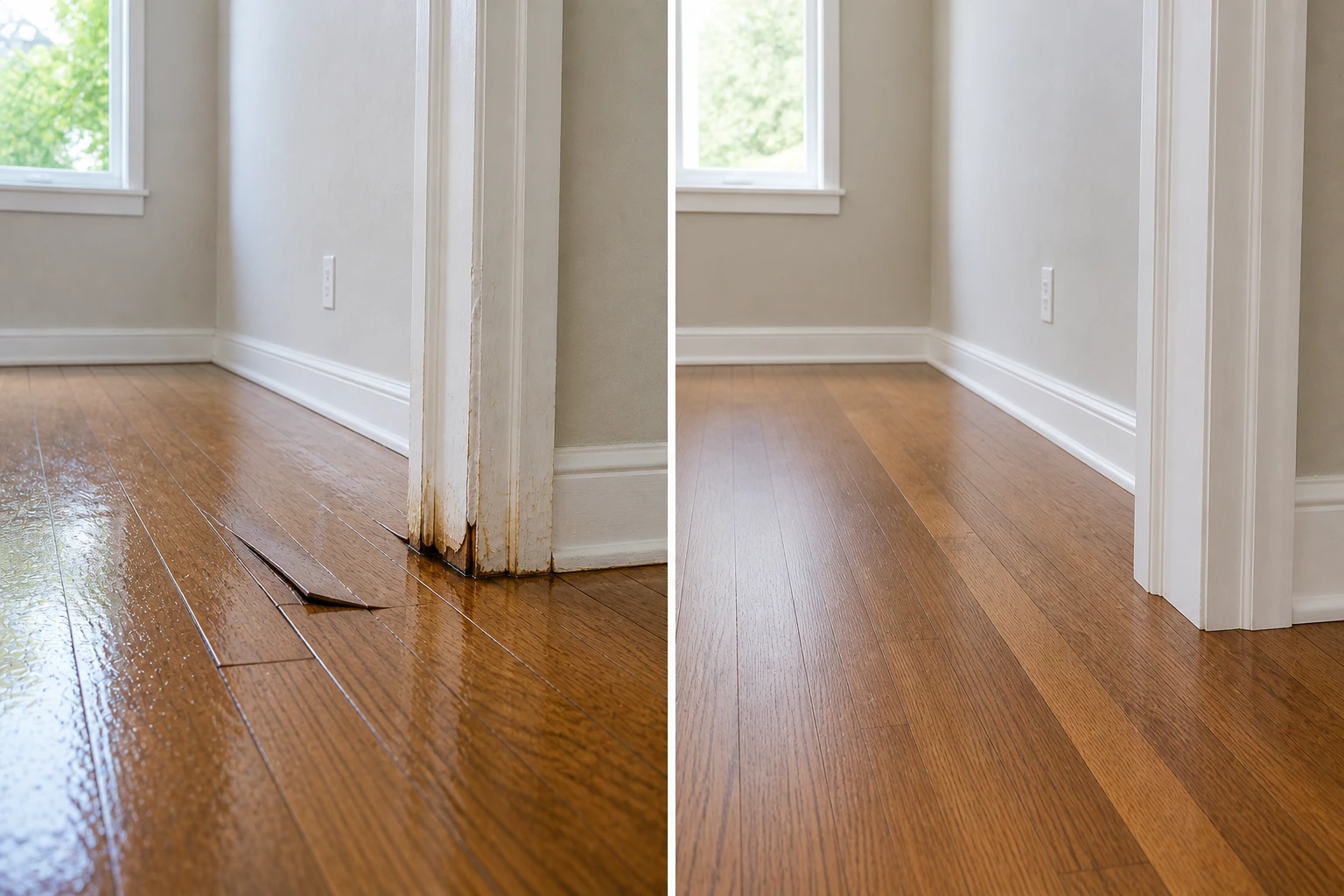
A pipe bursts at 2 a.m., water is running across your kitchen floor, and the first question after “how do I stop this?” is “will insurance pay for it?” The honest answer: it depends — on what caused the water, how fast you acted, and what your policy actually says. California homeowners policies cover a lot of water damage, but the exclusions are real, and the difference between a covered claim and a denied one often comes down to the first 24 hours.
Timberline Restoration handles water damage claims across South Orange County every week, and we work with homeowners and their adjusters through the whole process. This post explains how coverage actually works in California, what’s usually covered, what’s usually not, and what to do right now if you’re standing in water.
The Short Answer
Most standard California homeowners policies (HO-3, the most common kind) cover sudden and accidental water damage from inside the home — a burst pipe, a failed washing machine hose, a water heater that lets go, a dishwasher supply line that splits. They generally do not cover water that comes from outside the home (flooding, groundwater, storm surge) or damage that built up slowly over time (a leak that dripped for months, a roof that was never maintained). And they do not cover the thing that broke — the policy pays to fix the damage the water caused, not to replace the failed pipe or appliance itself.
That distinction — sudden vs. gradual, inside vs. outside — is where most claims are won or lost.
What’s Usually Covered
Burst or frozen pipes. A supply line that bursts is the classic covered claim. California doesn’t get many hard freezes, but South OC homes do get cold snaps, and uninsulated pipes in attics and exterior walls in San Clemente, Dana Point, and Laguna Niguel have burst in winter cold.
Appliance failures. A washing machine hose that blows, a dishwasher that overflows, a refrigerator water line that splits, a water heater that ruptures — all typically covered as sudden and accidental, as long as the failure was sudden.
Plumbing leaks that are discovered promptly. A supply line under a sink that lets go while you’re home, or a toilet supply line that fails overnight — covered, because the damage happened suddenly and you acted on it.
Water damage from a covered event. If a windstorm tears off part of your roof and rain gets in, the resulting water damage is usually covered because the roof damage itself was a covered event.
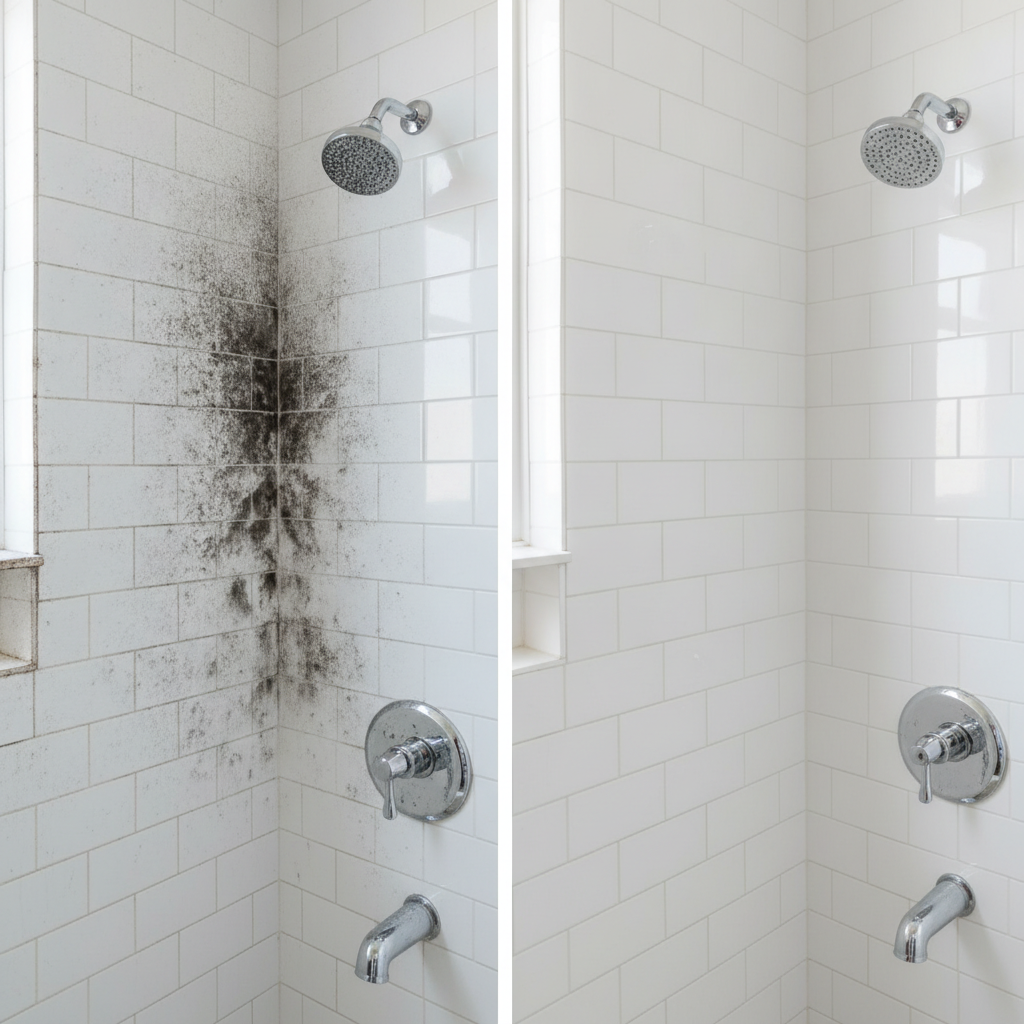
Mold remediation, sometimes. Many California policies include limited mold coverage — often capped at $5,000–$10,000 — and only when the mold resulted from a covered water loss. Read your policy’s mold sublimit; it’s often much lower than people expect.
What’s Usually NOT Covered
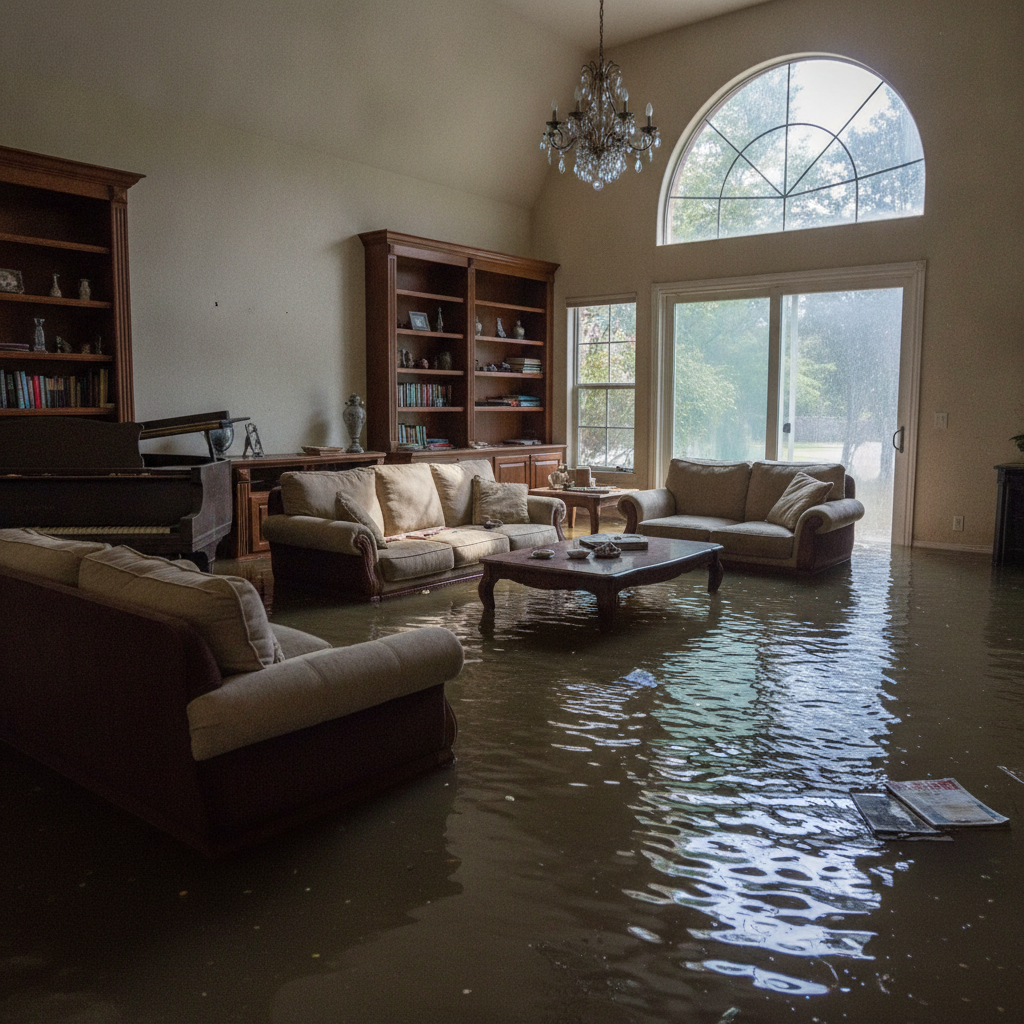
Flooding from outside. Rising water from heavy rain, a creek overflowing, or storm surge is not covered by a standard homeowners policy. That requires a separate flood insurance policy, usually through the National Flood Insurance Program (NFIP) or a private flood carrier. This matters in South OC: homes near San Juan Creek, Trabuco Creek, and the low-lying areas of San Clemente and Dana Point can take on water in a big storm, and standard homeowners insurance won’t touch it.
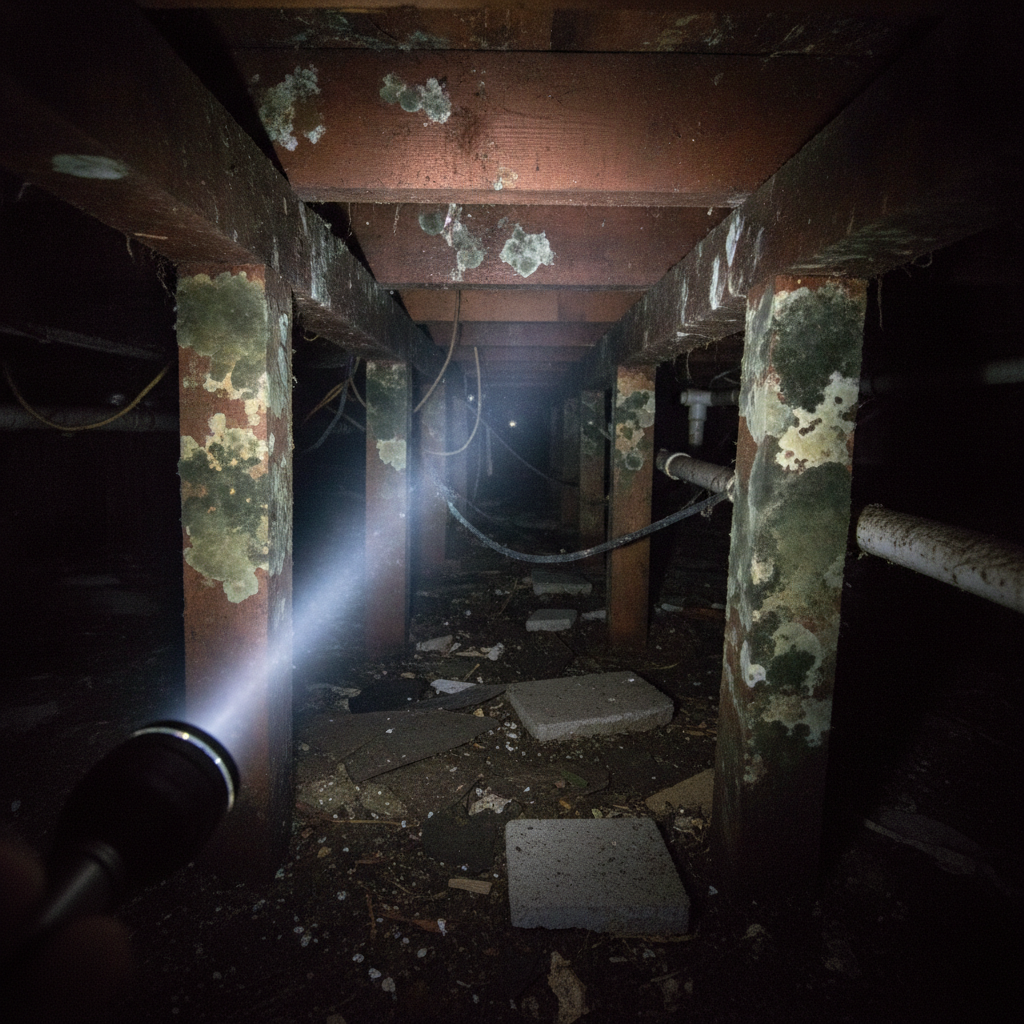
Gradual leaks and long-term seepage. A shower pan that’s been leaking into the subfloor for a year, a slow drip under a slab, a toilet wax ring that’s been failing for months — insurers call this a maintenance issue, and they deny it. This is the most common denial we see. The leak itself may be small, but the damage is large, and the insurer’s position is that a homeowner should have caught it.
Sewer backups. A standard policy does not cover sewage backing up into your home. Many carriers offer a sewer backup endorsement for a modest premium — it’s worth having, and it’s one of the cheapest endorsements you can buy. Without it, a sewage loss is out of pocket.
Roof leaks from wear and tear. A roof that’s simply old and leaking is a maintenance problem, not a covered loss. But if a storm damages the roof and water gets in, the resulting interior damage is usually covered — and the roof repair itself may be covered as part of the storm claim.
Groundwater and foundation seepage. Water seeping up through a slab or foundation is excluded on most policies. Slab leaks themselves — a copper line under the slab that fails — are a gray area: the water damage to your floors and walls is often covered, but the cost of accessing and repairing the pipe under the slab may not be.
The broken thing itself. Your policy covers the damage the water caused — the drywall, flooring, cabinets, and contents. It does not pay to replace the burst pipe, the failed water heater, or the appliance that caused the problem. That’s on you, and it’s one of the most common surprises in a claim.
California-Specific Things to Know
You have a duty to mitigate. California policies require you to take reasonable steps to prevent further damage — shut off the water, move belongings, get a restoration company in to extract water and start drying. Insurers can reduce or deny a claim if you let water sit for days when you could have acted. This is why the first 24 hours matter so much: document everything, then get help in fast.
The “efficient proximate cause” rule. California follows this doctrine: if a covered cause sets off a chain of events that leads to damage, the whole loss may be covered even if an excluded cause is also in the chain. It’s a powerful rule for homeowners, and it’s one reason water claims in California are often more favorable than people expect — but it also means claims get complicated, and adjusters and attorneys argue about it. You don’t need to know the case law; you need a restoration company that documents the cause carefully.
Earthquake and flood are separate policies. Neither is in a standard homeowners policy. If you live in a flood zone — and parts of San Juan Capistrano, Dana Point, and San Clemente are in or near FEMA flood zones — flood insurance is a separate purchase. The same goes for earthquake coverage through the California Earthquake Authority or a private carrier.
Your deductible applies. Water claims are subject to your policy deductible, which on many California policies is now $1,000–$2,500, and some carriers have moved to percentage deductibles. A small loss under your deductible isn’t worth filing — and filing small claims can affect your rates and your insurability, so think before you call it in.
What to Do Right Now (If You’re Standing in Water)
- Stop the water. Shut off the main water supply if you can’t isolate the source. If it’s sewage, don’t touch it — get out and call a professional.
- Call your insurance company and open a claim. Do this the same day. Get a claim number and write it down.
- Take photos and video of everything — the source, the water, the damage, your belongings — before anything is moved or torn out.
- Call a restoration company. Water extraction and drying need to start within 24–48 hours to prevent mold. A reputable restoration company documents the damage in the format adjusters expect, and works with your adjuster directly. That’s part of what we do.
- Don’t throw anything away yet. Keep damaged items until the adjuster has seen them or told you to dispose of them. Bag and tag if you must move things.
- Keep every receipt. Emergency water shutoff, hotel if you can’t stay in the house, anything you buy to protect the property — keep the receipts. Many policies cover additional living expenses and mitigation costs.
For a step-by-step walkthrough of that first day, see our post on the first 24 hours after water damage.
Working With Your Adjuster
Your adjuster works for the insurance company, not for you — but in practice, most adjusters want a clean, well-documented claim that they can close. The things that slow a claim down are poor documentation, disputed scope, and disagreements about what caused the loss. A restoration company that scopes the job properly, photographs everything, and uses standard estimating software (Xactimate is the industry standard) makes the adjuster’s job easier and your claim faster.
If your claim is denied or underpaid, you have options: ask for a written explanation of the denial, get a second opinion from a public adjuster (they work for you and take a percentage of the settlement), or talk to a California insurance attorney. Don’t accept a denial at face value if the facts don’t match it — but also don’t assume every denial is wrong. Gradual leaks really are excluded, and no amount of arguing changes that.
The One Endorsement Worth Buying
If you take one thing from this post: check whether your policy has a water backup and sump overflow endorsement, and add it if it doesn’t. It usually costs $50–$150 a year, and it covers sewage and drain backups that a standard policy excludes. A single sewage backup in a South OC home can cost $10,000–$30,000 to clean up and restore. That endorsement is the best value in homeowners insurance.
Also check your mold sublimit, your deductible, and whether your policy covers the cost of tearing out and accessing a slab leak. A ten-minute call to your agent can tell you all three.
FAQ
Does homeowners insurance cover water damage in California?
Usually yes, if the water damage was sudden and accidental — a burst pipe, a failed appliance hose, or a water heater rupture. It generally does not cover flooding from outside, gradual leaks, sewer backups (without an endorsement), or wear-and-tear roof leaks.
Does homeowners insurance cover a burst pipe?
Yes, in most cases. The water damage caused by the burst pipe is covered; the cost of replacing the pipe itself usually is not.
What water damage is not covered by homeowners insurance?
Flooding from rising water, gradual or long-term leaks, sewer backups without an endorsement, groundwater seepage, and damage from lack of maintenance are all typically excluded from standard California homeowners policies.
Does homeowners insurance cover mold?
Sometimes, and usually only up to a sublimit — commonly $5,000–$10,000 — when the mold resulted from a covered water loss. Mold from a long-term leak or maintenance issue is usually not covered.
Should I file a claim for water damage?
If the damage is significantly above your deductible and was sudden and accidental, yes — file promptly. If the damage is close to or below your deductible, or if it’s a slow leak that built up over time, think carefully before filing: small claims can affect your rates and insurability.
How fast do I need to act after water damage?
Immediately. You have a duty to mitigate further damage, and insurers can reduce a claim if water is left sitting. Water extraction and drying should start within 24–48 hours to prevent mold growth.
The Bottom Line
California homeowners insurance covers a lot of water damage — but only the sudden kind, from inside the home, and only if you act fast and document well. The exclusions are real: flooding, slow leaks, and sewer backups are usually on you unless you’ve bought the right endorsements. If you’re dealing with water damage right now, the most important thing is the first 24 hours: stop the water, document everything, and get a restoration company in to start drying.
If you have water damage in your South Orange County home, Timberline Restoration can help — from emergency water extraction to working directly with your insurance adjuster. Reach us at restoration@timberlinebuild.co.