Mold Remediation in Orange County
Mold doesn’t stop on its own
Mold spreads through spores. Once established in drywall, framing, or insulation, it grows into adjacent materials quickly — especially in OC’s coastal humidity. A musty smell or visible discoloration is usually the surface sign of something that runs deeper. Our job is to find the full affected area, contain the spread, and remove the contamination without disturbing more of the structure than necessary.
Most mold problems we see in Orange County homes trace back to unresolved water damage — a slow plumbing leak, a roof penetration, or moisture that sat too long after a flood. Identifying the moisture source is the first step. Removing mold without fixing the source is temporary at best.
What this service includes
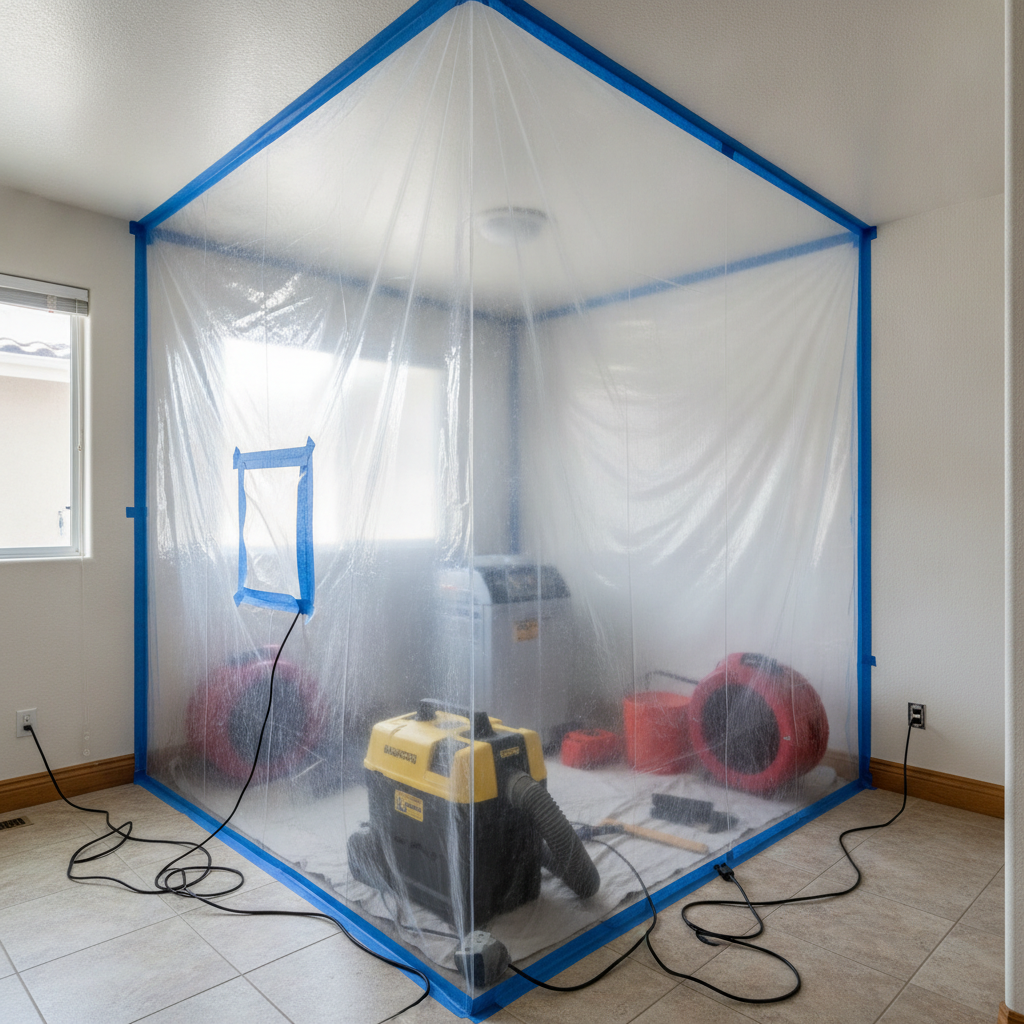
Visual inspection and moisture mapping to find the full extent of contamination. Containment setup — plastic sheeting and negative air pressure — to prevent spore spread during work. HEPA air scrubbing to filter airborne particles. Mold removal and antimicrobial treatment of all affected surfaces. Selective demolition of unsalvageable drywall, insulation, or framing. Dry-out verification before closing walls. Documentation suitable for insurance claims and real estate disclosures.
Situations we help with

Mold after water damage

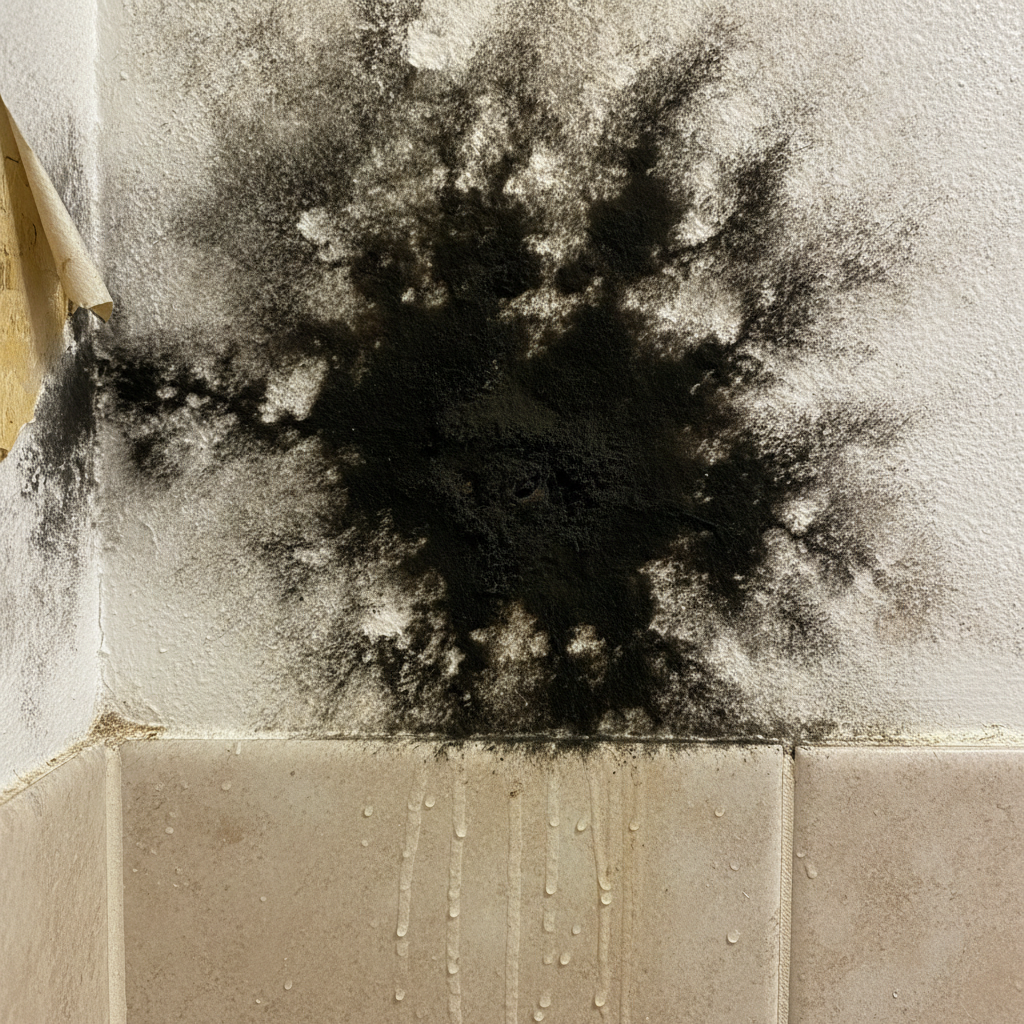
Black mold in bathrooms or crawl spaces

Mold found during a home sale or inspection

Persistent musty odor with no visible source

Post-flood mold growth
FAQ
How do I know if I have mold in my Orange County home?
The most reliable indicator is a persistent musty odor — particularly in rooms that had any water damage, high humidity, or plumbing issues. Visible mold is obvious, but mold is frequently hidden inside wall cavities, under flooring, or behind baseboards. Other indicators: allergy-like symptoms — nasal congestion, eye irritation, headaches — that improve when you leave home, discoloration at drywall seams, and peeling paint near moisture-prone areas. Orange County’s coastal climate creates favorable mold conditions whenever moisture is present for more than 48 hours.
What is the difference between mold removal and mold remediation?
Mold removal refers to physically cleaning or removing mold-affected materials. Mold remediation is the full professional process: identifying the moisture source that allowed mold to grow, setting up containment to prevent spore spread during work, removing contaminated materials, treating affected surfaces with antimicrobial agents, running HEPA air scrubbers to filter airborne spores, verifying dryness, and documenting the process. Remediation without addressing the moisture source is temporary — mold will return.
Is black mold more dangerous than other types of mold?
Black mold typically refers to Stachybotrys chartarum, which can produce mycotoxins in large colonies. However, mold color is not a reliable indicator of species or health risk — many molds appear dark, and lab testing is the only way to identify species. From a remediation standpoint, all mold growth in a home should be taken seriously and removed professionally regardless of color. Disturbing mold without proper containment spreads spores throughout the structure.
Do I need to leave my home during mold remediation?
It depends on the scope. For small contained areas with proper plastic sheeting containment in place, occupying other parts of the home is generally fine. For larger projects involving significant demolition or HEPA air scrubbers running in common areas, temporary relocation may make more sense. Households with young children, elderly members, or anyone with respiratory conditions should take extra precautions. We give you a direct recommendation based on your specific situation after the initial assessment.
Will my homeowner’s insurance cover mold remediation?
Coverage depends on the root cause. Mold that resulted from a sudden covered event — a burst pipe, appliance failure, or flood that was reported and addressed — is generally covered under most California homeowner policies. Mold from gradual leaks, deferred maintenance, or pre-existing moisture problems is typically excluded. We provide a scope report, photos, and moisture data that clearly identifies the source and timeline of mold growth, giving your adjuster what they need to make an accurate coverage determination.
How long does mold remediation take?
Small localized areas — a single wall cavity, under-sink mold from a dripping trap — can be remediated in one to two days. Projects involving multiple rooms, structural materials, or significant demolition and drying typically run three to seven days. Projects where the moisture source was active for a long time take longer. We give you a specific estimate after the initial assessment — not a generic timeline.
What causes mold in Orange County homes specifically?
OC’s coastal cities — Newport Beach, Huntington Beach, Laguna Beach, Dana Point, San Clemente — have consistently higher ambient humidity that creates favorable mold conditions whenever any moisture source is present. Slab-foundation homes throughout Anaheim, Santa Ana, Irvine, and Garden Grove are vulnerable to under-slab moisture migration. Older housing stock in Fullerton, Placentia, and Brea often has aging plumbing that develops slow leaks over years. Post-rain water intrusion through aging window seals, flat roofs, and poorly sealed penetrations is another common trigger.
Can I clean up mold myself with bleach?
For very small surface mold on non-porous materials — a few square inches on a tile surface or sealed concrete — an appropriate antimicrobial product can work. But mold on drywall, wood framing, insulation, or grout lines is a different situation. Bleach kills surface mold but does not penetrate porous materials, leaving the root structure intact. More importantly, disturbing mold without containment spreads spores throughout your home. California guidelines generally recommend professional remediation for mold covering more than 10 square feet.
How do I know when mold remediation is actually complete?
Remediation is complete when: all visibly moldy materials have been removed, affected surfaces have been treated with antimicrobial agents, the underlying moisture source has been resolved and the structure is confirmed dry with moisture meters, and HEPA air scrubbing has cleared the containment zone. Some clients request post-remediation air quality testing by an independent third-party hygienist to verify spore counts returned to normal levels — this provides independent clearance confirmation.
If I had water damage in the past that was not professionally dried, should I get a mold assessment?
Yes — particularly in Orange County where humidity accelerates mold growth. Any water damage event that was not dried by a professional with moisture meter verification is a potential mold risk. This includes DIY dry-outs after appliance floods, damage managed with household fans, historic damage discovered during renovation, and any past event where the drying timeline is unclear. A professional mold assessment uses moisture meters and visual inspection to determine whether hidden mold is present before it becomes a larger problem.