Flood Cleanup in Orange County
When water is already on the floor
Flood cleanup is about more than removing standing water. It is about understanding where the water traveled, what materials were affected, and how to dry the space without creating bigger problems later.
Practical next steps after a flood
Move valuables if safe, avoid spreading water through unaffected rooms, and call for a plan. We help property owners understand what needs immediate attention and what comes next.
Common flood scenarios

Overflowing appliances

Failed supply lines

Toilet overflows

Sink overflows

Room-to-room water spread
FAQ
What is the first thing I should do after a flood in my Orange County home?
Stop the water source if you can — shut off the main water supply if it is a plumbing failure. Move valuables out of standing water if it is safe to do so. Avoid walking through rooms with standing water near electrical outlets or panels. Document everything with photos before anything is moved. Then call a flood cleanup company. Do not run household fans into wet wall cavities — it can push moisture deeper and accelerate mold growth.
Is flood cleanup different from standard water damage restoration?
Flood cleanup refers to events with large volumes of water — overflowing appliances, failed water heaters, heavy rain intrusion, or plumbing failures that released significant flow before being stopped. The initial phase is more urgent: active water containment, rapid extraction, and immediate material assessment. Both scenarios require structural drying and documentation, but flood events often involve more materials, more rooms, and higher urgency in the first 24 hours.
How long does flood cleanup take in Orange County?
Active water extraction can often be completed within the first few hours. Structural drying — the phase that removes moisture from wall cavities, subfloor, and framing — runs three to seven days depending on how much water infiltrated and how long it sat. Larger floods or events not discovered immediately take longer. We provide daily moisture readings so you always know exactly where things stand.
Will my homeowner's insurance cover flood cleanup costs?
Standard California homeowner’s insurance covers sudden accidental internal flooding — burst pipes, appliance failures, plumbing events. It does not cover flooding from external sources like storm surge, overflowing waterways, or groundwater intrusion — that requires separate flood insurance. If you are unsure what triggered the event, we can help document it clearly so your adjuster can make an accurate determination.
What materials typically need to come out after a flood?
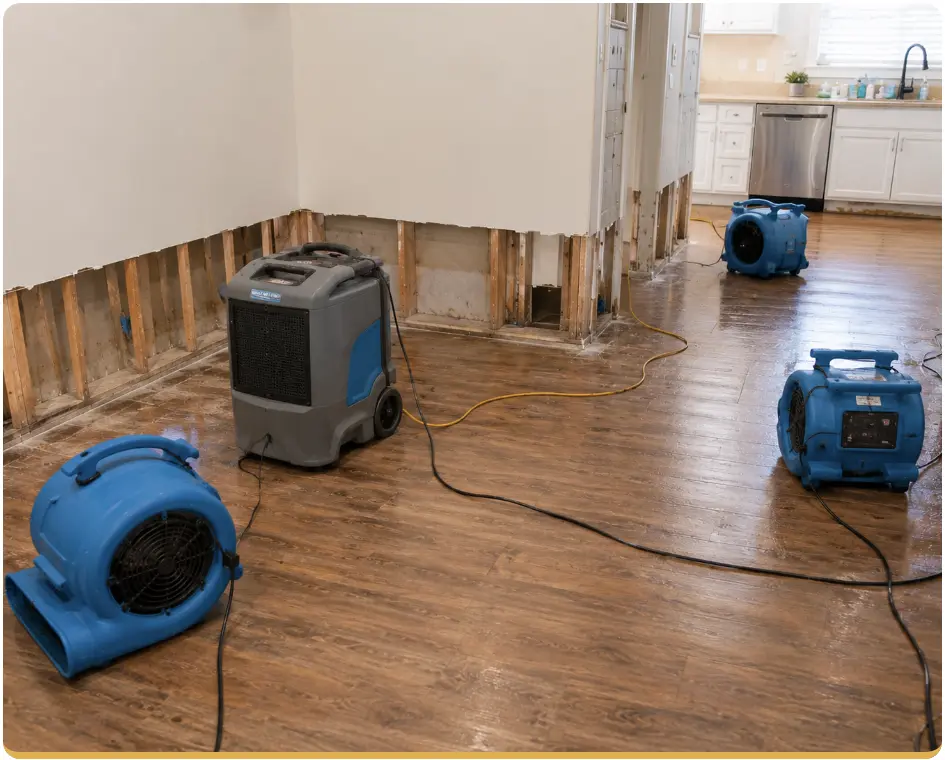
Saturated drywall below the waterline almost always needs to come out — it cannot dry adequately in place and becomes a mold substrate quickly. Carpet and carpet pad in flooded areas need to go. Insulation in walls or floors that absorbed water must be removed. Hardwood flooring may be salvageable if addressed within 24 to 48 hours, but often buckles and needs replacement. Every determination is made with moisture readings, not guesswork.
How do I know how far the water spread inside my walls?
You cannot know without moisture meters — and that is exactly why professional flood cleanup matters. Water wicks laterally through drywall and travels vertically through wall cavities faster than most homeowners expect. A flood that looks contained to one room may have saturated drywall in the adjacent hallway or spread under flooring into the next room. We use calibrated moisture meters to map the full extent before any drying equipment is placed.
Can mold grow after a flood even if things look dry on the surface?
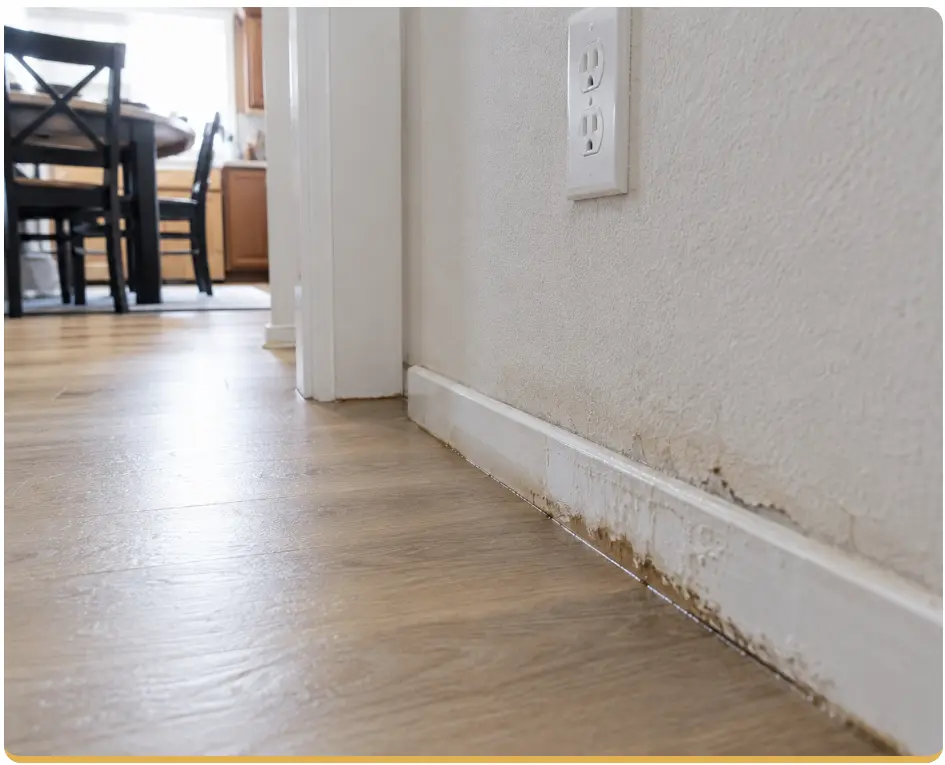
Yes — and this is the most common hidden consequence of incomplete flood cleanup. Surfaces may feel dry to the touch while wall cavities behind the drywall remain saturated. Mold establishes itself in 48 to 72 hours in Southern California conditions. If a flood was not thoroughly dried and documented, mold can grow undetected for weeks or months, often discovered only during renovation or a home sale inspection.
What causes most residential floods in Orange County?
The most frequent causes we see: washing machine supply hose failures, refrigerator ice-maker line leaks, dishwasher drain overflow, toilet supply line failure, water heater rupture, and HVAC condensate drain backup. During OC’s periodic heavy rain events, French drain failures, window and door seal failures, and flat-roof drainage issues create intrusion flooding. Many of these events happen when homeowners are away, so water spreads further before anyone responds.
Should I run fans and open windows after a flood to help dry things out?
Running fans can move surface moisture but does nothing for moisture inside wall cavities, under flooring, or in insulation. Opening windows in coastal OC cities can actually introduce higher-humidity outside air that slows drying. Professional flood cleanup uses commercial air movers that create directional high-velocity airflow through wall cavities, combined with industrial dehumidifiers that actively pull moisture from the air. Household fans are not a substitute.
Do you provide documentation for insurance claims after a flood?
Yes — documentation is a core part of what we deliver. We provide initial moisture readings and mapping showing all affected areas, daily drying logs with moisture progress, photo documentation of all affected materials before and during removal, a scope narrative describing what happened and what was found, and final clearance readings confirming the structure is dry. This documentation package gives your adjuster everything they need.