Slab Leak Cleanup in Orange County
The leak may be hidden, but the damage is not
Slab leaks often show up through symptoms first: warm spots on flooring, the sound of running water, unexplained utility spikes, damp flooring, or moisture around baseboards. Once the source is diagnosedand addressed, the restoration work begins.
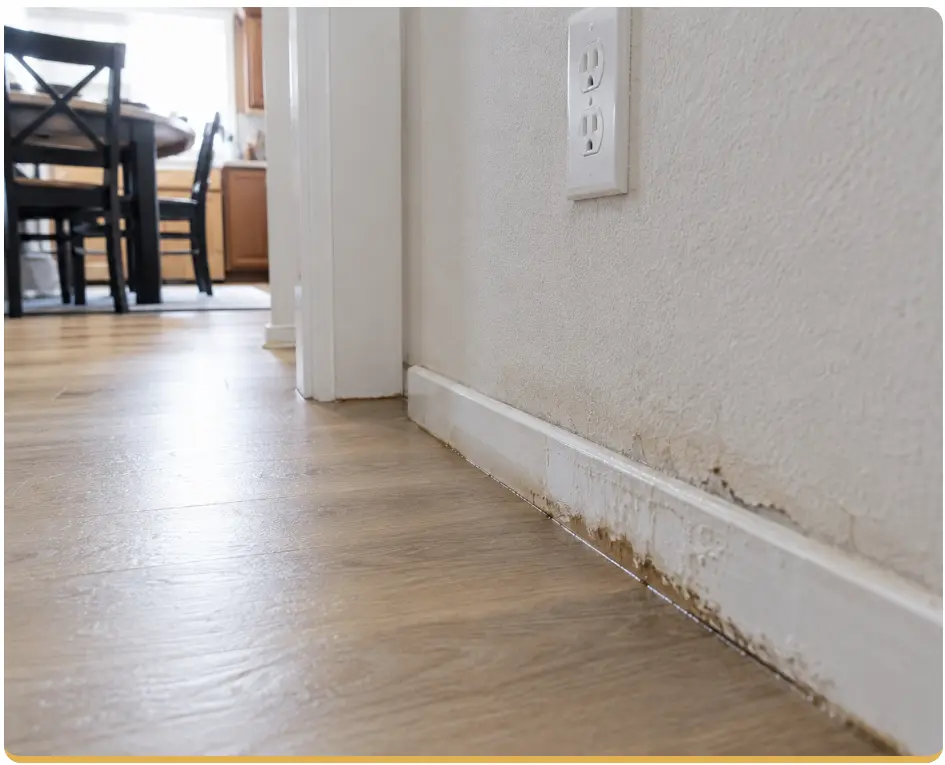
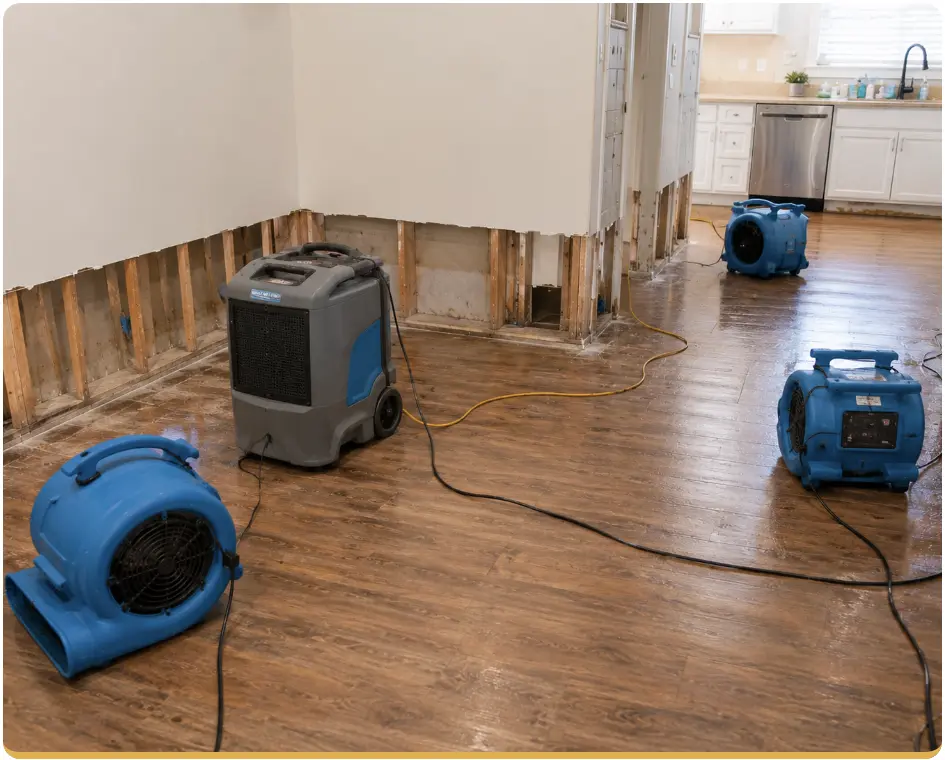
What we handle after a slab leak is found
We assess affected flooring and walls, open areas when needed, dry the structure, and help you understand the cleanest path to repair.
Why slab leaks need focused copy
Because many people search by symptom before they search by service, this page is designed to answerboth.

FAQ
What is a slab leak and why is it so common in Orange County?
A slab leak is a pipe failure beneath your concrete foundation. In Orange County, slab leaks are common because many homes were built in the 1960s through 1980s with copper pipes that corrode over time, the region’s soil shifts seasonally, and water chemistry in parts of OC accelerates pipe corrosion. When a pipe fails under the slab, water migrates upward through the concrete and saturates flooring, subfloor framing, and lower drywall — often for days before showing visible signs.
What are the first signs of slab leak water damage in my home?
The earliest signs are often subtle: warm spots on tile or hardwood floors indicating a hot water line leak, the sound of running water when all fixtures are off, unexplained spikes in your water bill, damp or musty odor at floor level, and buckling or discoloration in hardwood, laminate, or carpet. By the time flooring lifts visibly or moisture appears on baseboards, water has typically been present for some time. OC homes built before 1990 are especially vulnerable.
Do you find the slab leak, or just handle the water damage cleanup?
We handle the water damage cleanup — drying, demolition of affected materials, and documentation. Locating and repairing the pipe is the job of a licensed plumber. We often coordinate with plumbers on slab leak jobs because cleanup and repair need to happen in sequence: the pipe gets repaired first, then we dry and remediate the damage. If you do not have a plumber yet, we can refer you to trusted licensed plumbers we work with regularly throughout Orange County.
How much of my floor and walls typically needs to come out after a slab leak?
It depends on how long the leak ran and which direction the water traveled. Water from a slab leak wicks upward through flooring and laterally through wall framing. In a typical scenario: flooring in the affected area needs to come up, baseboards come off, and the lower 12 to 18 inches of drywall is removed to allow the wall cavity to dry. If the leak ran for weeks before discovery, damage can extend several rooms from the leak source.
Will my insurance cover slab leak water damage in California?
Standard homeowner’s policies in California typically cover the water damage resulting from a slab leak — the cleanup, drying, and affected materials. The pipe repair itself is often excluded as a maintenance item. Some policies have slab leak endorsements that cover detection and repair costs. We provide detailed documentation — moisture readings, scope, photos — that supports your claim regardless of which insurer you use.
How do you dry out moisture that came up through a concrete slab?
Drying slab leak damage requires removing the flooring and any saturated underlayment to expose the subfloor. Commercial air movers are positioned to create airflow across the concrete surface and through wall cavities. Industrial dehumidifiers pull moisture from the air continuously. Concrete dries more slowly than wood framing, so slab leak dry-outs often take five to ten days. We monitor moisture daily on both the concrete and surrounding framing until all materials reach acceptable levels.
Can a slab leak lead to mold in my Orange County home?
Yes — and it is one of the more common hidden mold sources we find in OC homes. Slab leaks that went undetected — or were detected but not fully dried — leave sustained moisture in wall framing and subfloor. Mold can establish in 48 to 72 hours and continues growing as long as moisture is present. Because the damage is at floor level, it is often concealed behind baseboards and inside wall cavities. If you had a slab leak repaired but never professionally dried and documented, a mold assessment is worth doing.
How long does slab leak cleanup and drying take?
Most residential slab leak cleanup projects run five to ten days from initial assessment to moisture clearance. The first day involves assessment, flooring removal, and equipment placement. Drying runs five to seven days for most scenarios, longer for large events or when damage spread significantly before discovery. Final moisture readings confirm the structure is dry before equipment is removed. We provide daily readings so you know exactly how the drying is progressing.
Should I wait for my insurance adjuster before starting slab leak cleanup?
No — and most insurance policies actually require you to mitigate further damage promptly. Waiting days for an adjuster while water continues to spread can increase the damage significantly and potentially reduce what your policy covers. We document everything thoroughly before any work begins — photos, moisture readings, scope notes — so the adjuster has a complete picture. Report the claim to your insurer, then call us to start cleanup. The two can happen simultaneously.
What is the difference between slab leak cleanup and general water damage restoration?
Slab leak cleanup is a specific type of water damage restoration focused on moisture that entered the structure from below the foundation. The techniques are the same — assessment, extraction where needed, structural drying, selective demolition — but the source, direction of moisture travel, and materials involved are specific to this scenario. Because moisture travels upward and outward from the slab, mapping the full extent of affected areas before placing drying equipment is especially important.