Water Damage Restoration in Orange County
Water rarely stays where it starts
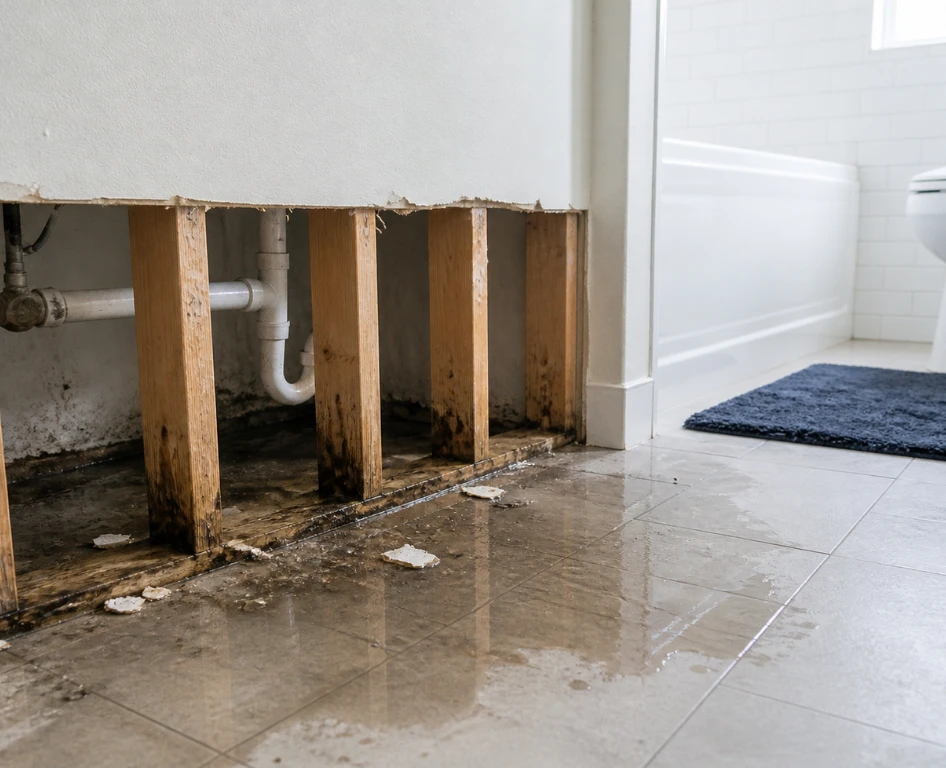
A leak behind a wall or under flooring can spread farther than the visible stain suggests. Our job is to identify affected areas, reduce ongoing damage, and create a drying plan that makes sense for the structure.
What this service includes
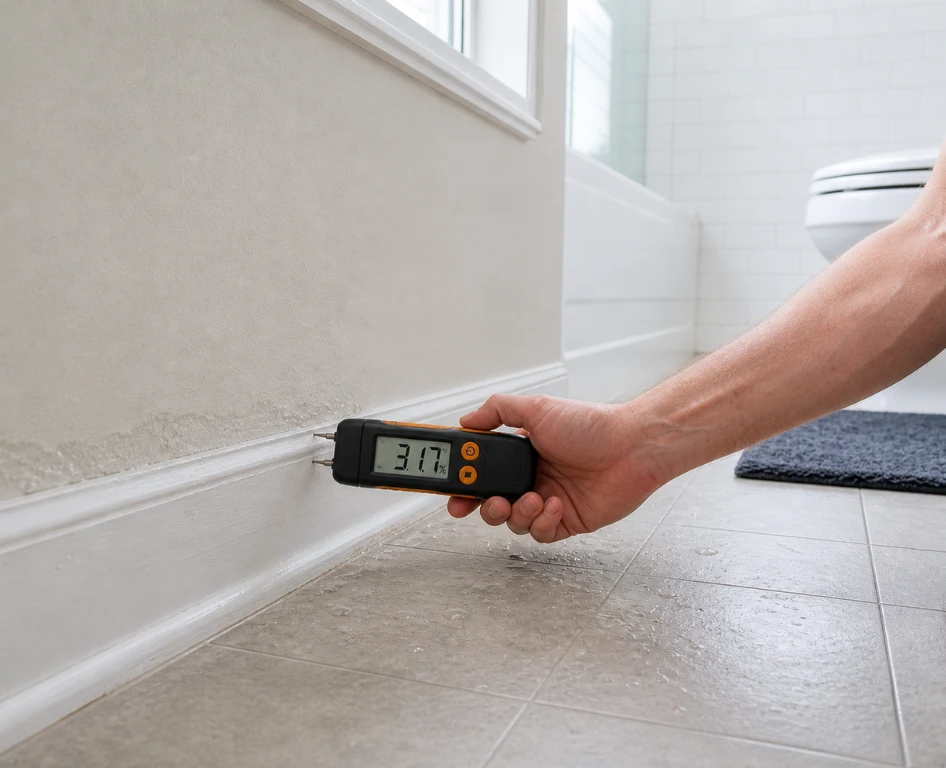
Inspection, moisture checks, water removal where needed, structural drying, selective demolition when necessary, and documentation for the next repair phase.
Situations we help with
Burst pipes

Appliance overflows
Hidden plumbing leaks
Supply-line failures

Sudden interior water events
FAQ
How soon after discovering water damage should I call a restoration company?
Immediately — or at minimum within the first 24 hours. Water migrates through drywall, insulation, and subfloor quickly. What looks like a small stain on the wall can represent significant saturation behind the surface. Every hour of delay expands the affected area and increases the likelihood of mold. In Orange County’s climate, mold can establish itself in as little as 48 hours after an unaddressed moisture event.
What does water damage restoration actually include?
A proper scope covers: initial inspection and moisture mapping with calibrated meters, water extraction where standing water is present, controlled demolition of materials that cannot be dried in place — saturated drywall, flooring, insulation — commercial-grade structural drying with air movers and dehumidifiers, daily moisture readings to track progress, and a final documentation package with readings and photos. Reconstruction comes after the structure is certified dry.
Will my homeowner's insurance pay for water damage restoration in California?
Most California homeowner policies cover sudden accidental water damage — burst pipes, appliance supply line failures, HVAC condensate issues, and similar events. Gradual leaks from deferred maintenance are typically excluded. We provide thorough documentation throughout — moisture logs, affected material inventories, photo evidence, scope narratives — that gives your adjuster a clear picture of the event and supports your claim.
What causes most water damage claims in Orange County homes?
The most common causes we see in OC: supply line failures under sinks and at washing machines — especially in homes over 15 years old — refrigerator ice-maker line leaks, HVAC secondary drain pan overflows, water heater failures, and slab leaks. Coastal cities like Newport Beach, Huntington Beach, and Dana Point also see more moisture intrusion from weather events. Older housing stock in Anaheim, Fullerton, and Santa Ana tends to have more aged plumbing that fails without warning.
Can wet drywall and flooring be dried in place, or does it have to come out?
Some materials can be dried in place with targeted equipment — particularly drywall that was wet for less than 24 to 48 hours and has not reached full saturation. Flooring, insulation, and drywall that absorbed water over a longer period, shows wicking, or has any mold present must be removed. We base every decision on moisture meter readings, not visual assessment alone.
How long does it take to dry out a water-damaged home?
The structural drying phase typically runs three to five days for a standard residential event affecting one room. Multi-room events, or damage that sat unaddressed before discovery, can take seven to ten days or more. We check moisture readings daily and adjust equipment as needed. Drying is complete when all affected materials reach acceptable moisture levels — not when a set number of days has passed.
Do you handle water damage from slab leaks specifically?
Yes. Slab leaks in Orange County are a common source of water damage — particularly in Irvine, Anaheim, Santa Ana, and other areas with older concrete slab foundations. Slab leak damage typically involves saturation traveling up through flooring from below, affecting the subfloor, flooring material, and adjacent walls. We assess all affected surfaces, dry the structure completely, and document the scope for insurance and plumbing repair coordination.
What is the difference between water mitigation and water damage restoration?
Mitigation refers to the emergency response phase — stopping the spread of damage, extracting water, and beginning drying. Restoration refers to the complete process of returning the structure to a dry, stable, documented state ready for reconstruction. We handle the full restoration scope including structural drying, selective demolition, moisture verification, and documentation. Reconstruction is a separate phase handled by a general contractor.
Should I try to dry out water damage myself before calling a professional?
For a small spill caught immediately, fans can help at the surface level. But for anything involving wall cavities, subfloor, or more than a surface area of moisture, DIY drying is almost always insufficient. Household fans do not create the airflow needed to dry wall cavities. Without moisture meters, you have no way to confirm materials are actually dry. The risk of hidden mold from an incomplete dry-out is high and costly.
Do you work with both homeowners and small commercial property owners?
We primarily serve residential homeowners throughout Orange County. For small commercial properties — offices, retail spaces, small multi-unit buildings — we evaluate on a project basis depending on scope and location. Call us and describe the situation; we will tell you quickly whether it is a fit and what the process looks like.